



On authorless material, positionless governments and the continuing sustainability of responsibility somewhere else
Apparently, the material arrived alone.
On Thursday, Ålands Radio returned to the international Everyone Can Flourish publication that was never published. This time, Micke Larsson, Secretary General of the Development and Sustainability Council, offered a much firmer account of how the work had supposedly been organised. He said:
Ålands roll var att fungera som ett forsknings- och studieobjekt.
(English: “Åland’s role was to serve as an object of research and study.”)
Åland could be interviewed and answer questions, surveyed and asked to provide material. People could attend meetings, deliver presentations, participate in the contribution and review process and host international guests.
What nobody could apparently do was write anything.
UN-Habitat was responsible for producing the report. According to Larsson, the arrangement never included employees of the Government of Åland serving as authors or co-authors.
At first glance, this sounds quite tidy.
It also answers the wrong question.
There is a legitimate distinction here. Being interviewed for a study does not make someone an author. Providing an existing public document does not automatically make someone a co-author. UN-Habitat was responsible for producing the report, and the lead author, Cherie Enns, was responsible for writing it in her role as a UN-Habitat consultant. The lead author is the authority on intellectual contribution and the credits that participants receive based upon that contribution.
This is where “never” begins doing almost as much work as “paused” did last week.
Because none of this has ever been the dispute.
The dispute concerns what happens when a person supplies original written material for use in a publication. An interview may be acknowledged. An existing source may be cited. Original written material may receive a citation, an author note or another form of accurate credit. A person may be recognised for a specific contribution without being declared the author of the entire report. One must endeavor to hold several thoughts in their head at the same time.
And you don’t have to take my word for it. Take UN-Habitat’s word for it:
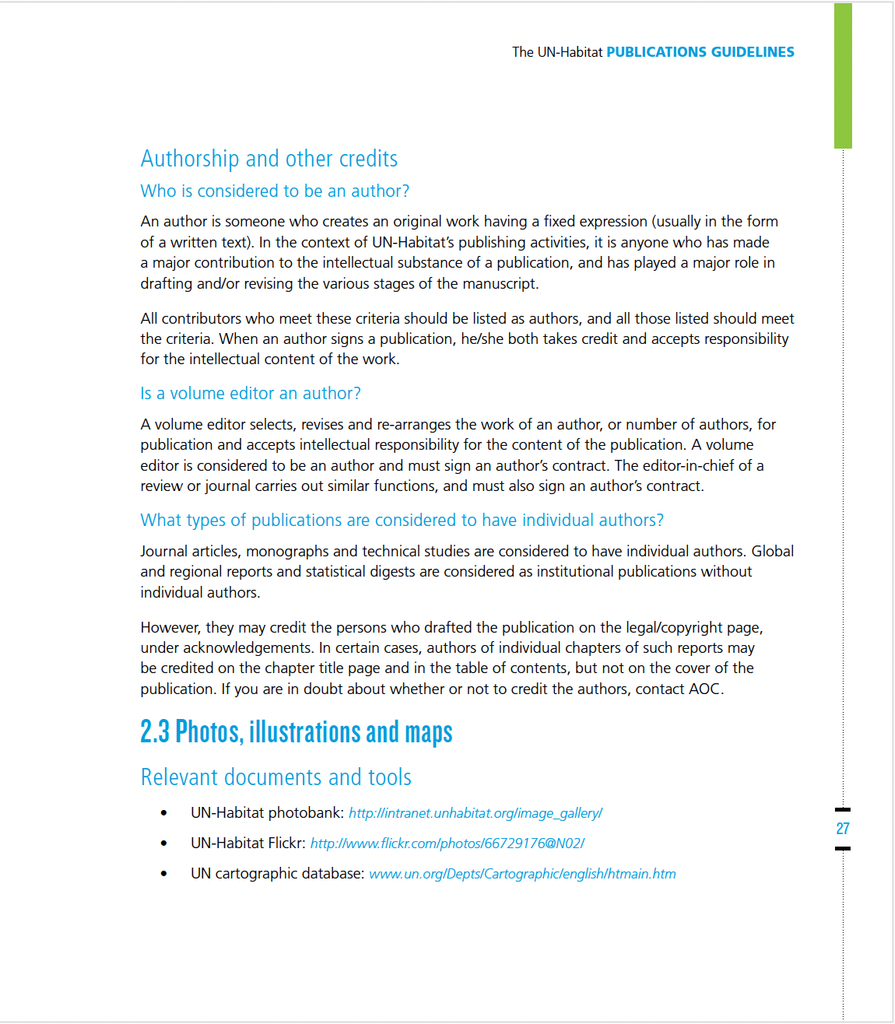
It is possible to be right about the report and still wrong about the paragraph. For everyone’s reference, I wrote a chapter based upon material I had created in my home and have developed other materials based upon this original material.
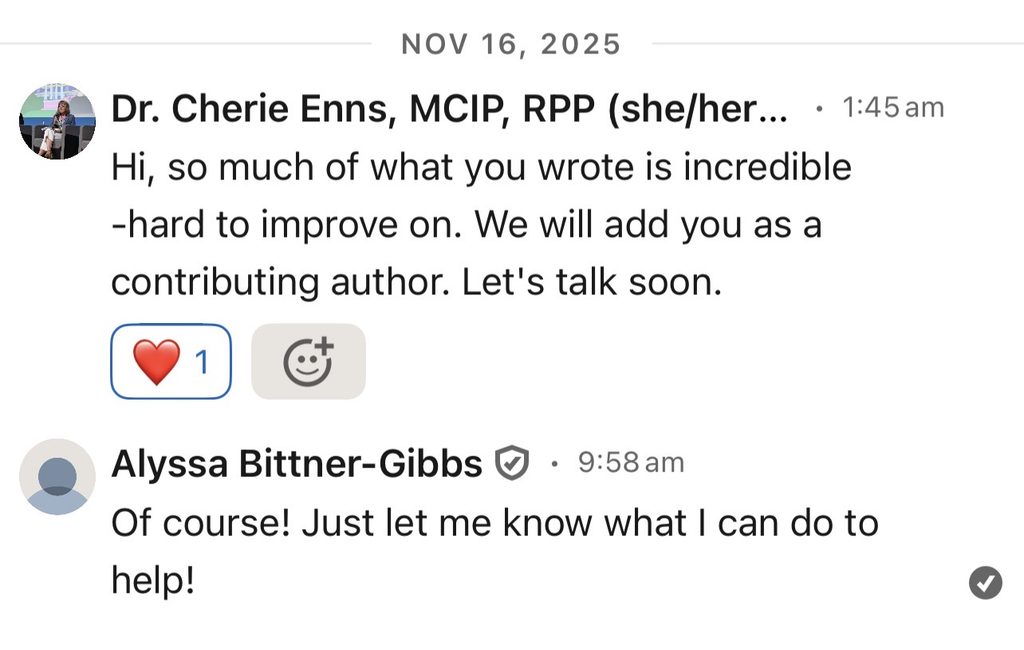
Apparently, for Micke Larsson, only interviews come from people. Material just comes from folders.
Larsson’s explanation desperately depends upon collapsing all of these distinctions into one enormous word called author. Once everything has been placed inside it, he can announce that no government employee was ever supposed to be an author and consider the matter resolved. That heavily manufactured ambiguity serves a purpose.
Publishing has developed several technologies for distinguishing among different contributions. These include acknowledgements, citations, author notes, contributor designations and, in especially advanced cases, even names.
Yet he and Lantråd Katrin Sjögren consistently state that UN-Habitat was responsible for writing the report, not them. No siree. Yet, this is somehow supposed to explain why a representative of the Åland Government can state with complete authority which people UN-Habitat could never have credited?
Hello?
Editorial responsibility, like most responsibility in this debacle, belongs elsewhere until someone elsewhere attempts to exercise it.
What I can tell you that if you read their publication manuals, UN-Habitat, like most publication houses, do not collapse every single nuance into foggy slop.
The report had a lead author, contracted by UN-Habitat. The material used in the report, however, appears to have had no author, no intellectual history and no discernible human provenance according to Larsson. It simply existed, rather like Ålandic apples in Geta, sea fog in the Gulf of Bothnia, or a government position nobody has technically taken.
Material, in this telling, is simply a naturally occurring Ålandic resource. One can almost see the Visit Åland brochure:
Our prized natural resources here on Åland are red granite, sea buckthorn and paragraphs.
Unfortunately for Larsson, most people with common sense know that written material is generally written by someone who puts their name to the work and takes responsibility for it. Civilisation did not wait for this project to invent footnotes or citations.
And as I wrote a chapter for the publication as was discussed, obviously my position was never that my name should appear as the author of the entire report. When the dispute became clear, I was willing to consider several solutions: accurate recognition of my particular contribution, appropriate citations or provenance note, another defensible formulation, or the entire removal of my material where then they could proceed without me.
Every one of those possibilities required a conversation in good faith.
On Åland, this appears to have been the genuinely advanced technology.
One could almost imagine a sign at the entrance to the project:
Thank you for the pages. Please leave your authorship at reception.
But then there is an inconvenient email sent by Larsson at 17.11 on 20 August 2025. The agenda for our meeting included “Contributions and review process” and named me, along with other locals, among those participating. (Note: I have provided this to the media, but decline to provide it here because of the other names on the list who deserve privacy.)
I had also sent Mr Larsson and Dr. Enns the substantial original material I had written. I explicitly stated that it could not be cited or used externally until he had reviewed it.
Such emails present a small difficulty for Larsson’s latest account because email, unlike institutional memory, retains timestamps.
On 16 November 2025, the lead author wrote to me:
Hi, so much of what you wrote is incredible—hard to improve on. We will add you as a contributing author. Let’s talk soon.
I informed Larsson myself of that decision on 17 November 2025. Yet again, you don’t have to take my word for it, here is the email:
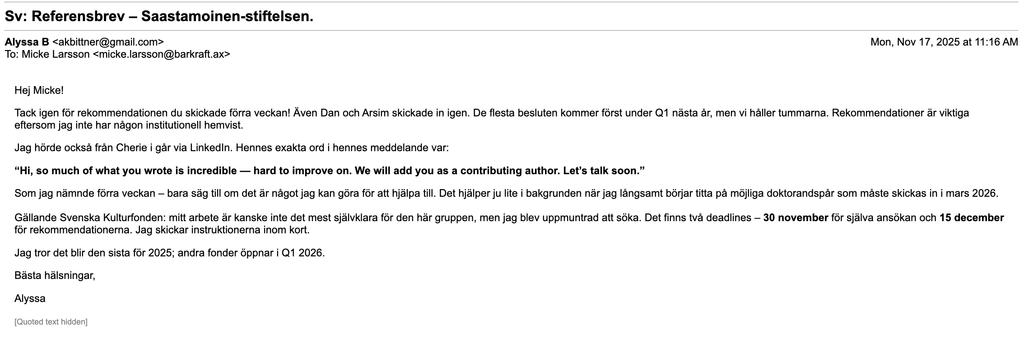
Now note, he did not reply to say that this was impossible. He did not say that it contradicted the arrangement with UN-Habitat. He did not explain that no employee of the Government of Åland could under any circumstances receive such recognition.
When we spoke again in person the afternoon of 26 March 2026 at Viktors Café, he did not tell me that the arrangement had changed or that the lead author had misunderstood it. When I wrote on 24 April 2026 to ask him what the hell was going on, he did not correct me then either.
So, if something had gone seriously wrong, there were quite a few opportunities to mention it. A single sentence would have done it. Like something with the grave restraint of a Nordic bureaucrat peering over a cup of black coffee and blandly stating:
Det här behöver vi reda ut.
Nothing came.
If it had been clear from the beginning that this could never happen, silence was an unusual way to communicate that clarity.
That ambiguity, you see, was the point. Unfortunately, ambiguity was also a recurring feature of our working relationship—one I repeatedly and politely asked him to address. When instructions, responsibilities and essential information remain unclear, employees compensate by overfunctioning, often until they burn out. That is damaging to anyone and especially punishing for neurodivergent workers like me. Fog may be picturesque over the Åland Sea. It is considerably less charming in a manager.
But today “Never” arrived somewhat later, suddenly fully formed and available for interview.
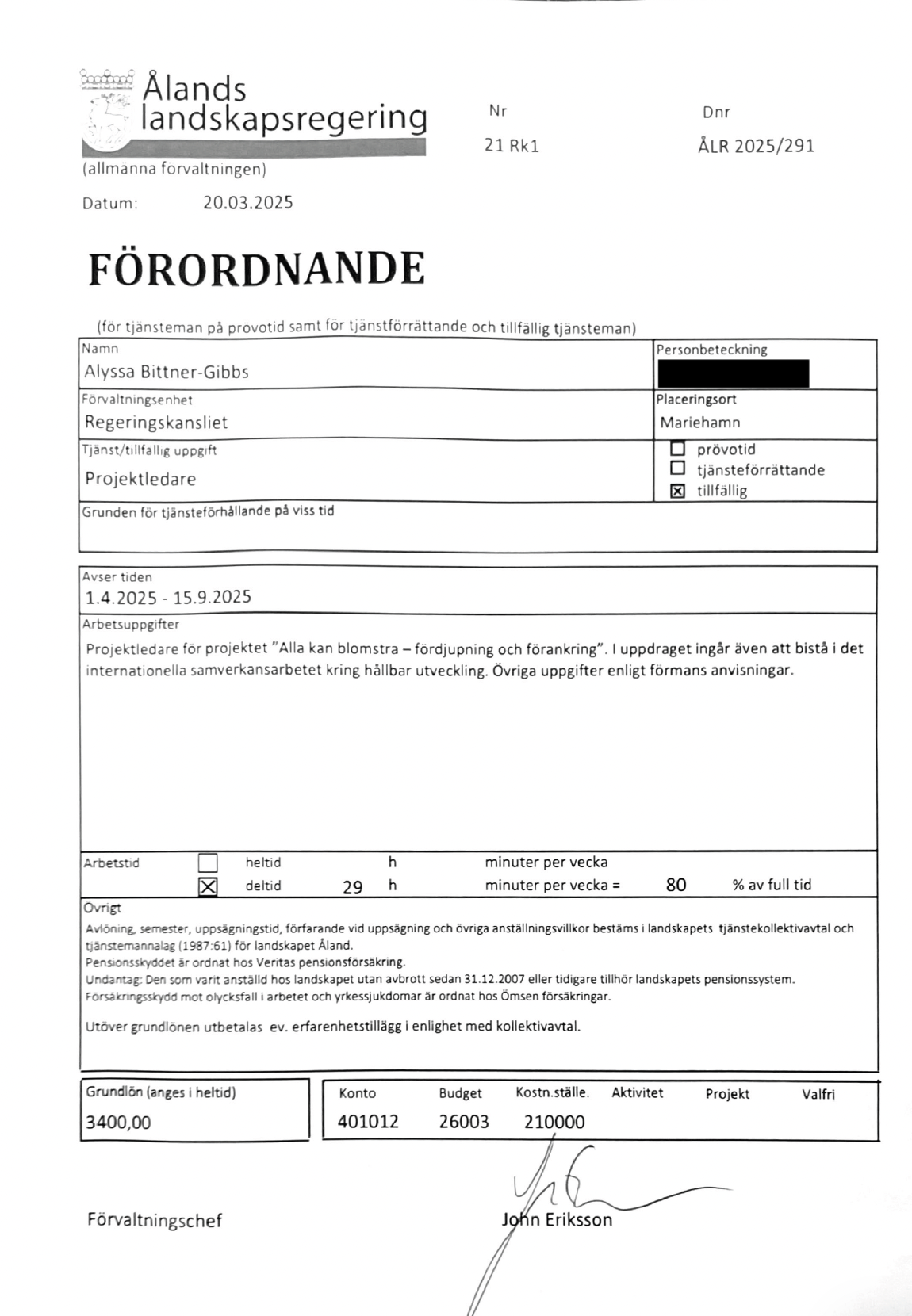
Larsson also said that my role at the Government of Åland concerned sustainability work locally, not writing the international report, and that he could not account for work undertaken outside that assignment.
Again, this contains a useful distinction. I was not employed to write the whole report. I have never claimed that I was.
Yet, international cooperation was expressly included in my appointment, which was signed by the förvaltningschefen himself, John Eriksson. At Micke’s behest, I was regularly included in meetings with UN-Habitat, presentations, visits, hosting arrangements and the less glamorous work through which international cooperation tends to occur.
If the international work was unrelated to my role, someone showed a remarkable and sustained commitment to inviting the wrong employee repeatedly.
The larger sleight of hand is to move from “she was not employed to write the report” to “nothing she wrote could require attribution in the report.”
These are not the same proposition, but I suppose the Government is desperately hoping you won’t notice that.
If anything, material written independently and supplied outside an ordinary employment assignment raises more questions about permission and attribution, not fewer. “We did not pay her to write it” is a curious opening argument for why somebody else should be free to use it without a conversation.
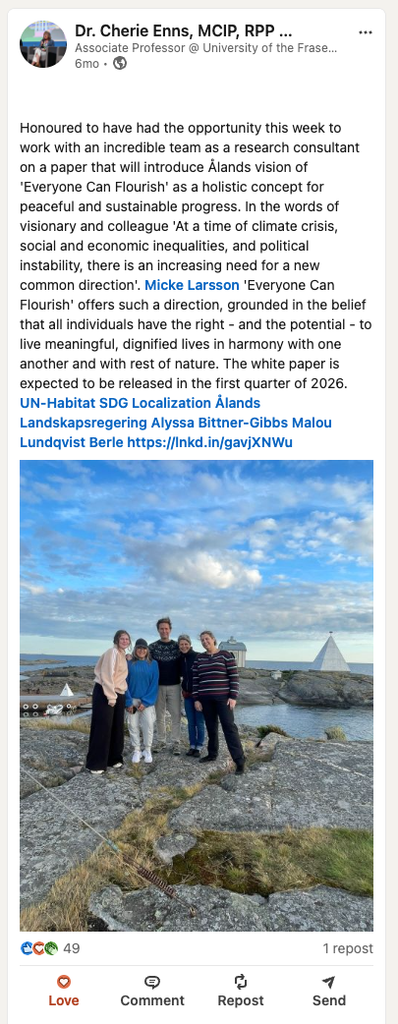
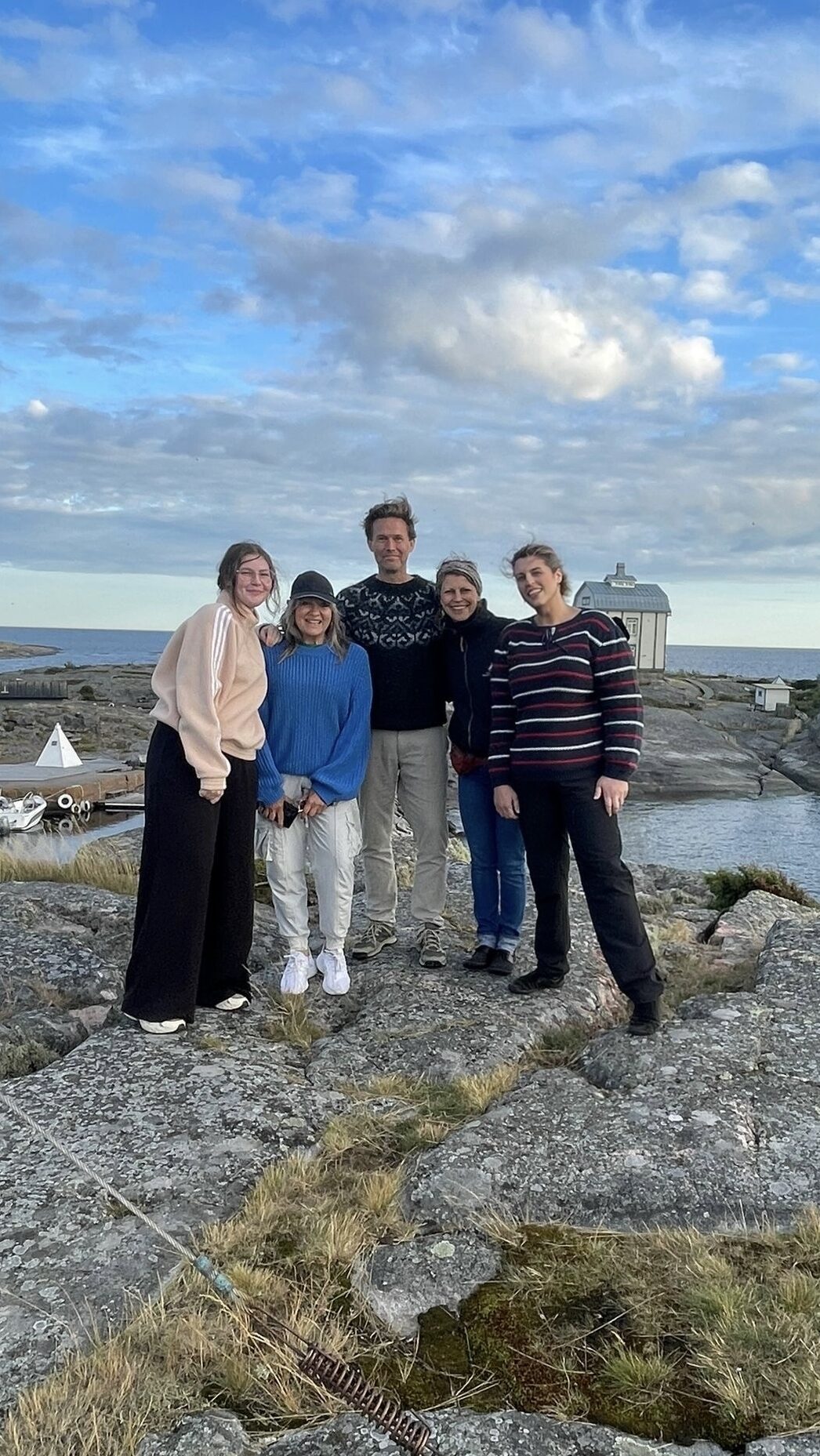
Anyway, here is a picture of me (far right of picture in the striped sweater) not participating in the UN-Habitat consultant/lead author’s visit in August 2025. Cherie is wearing my blue cable knit sweater second from the left:
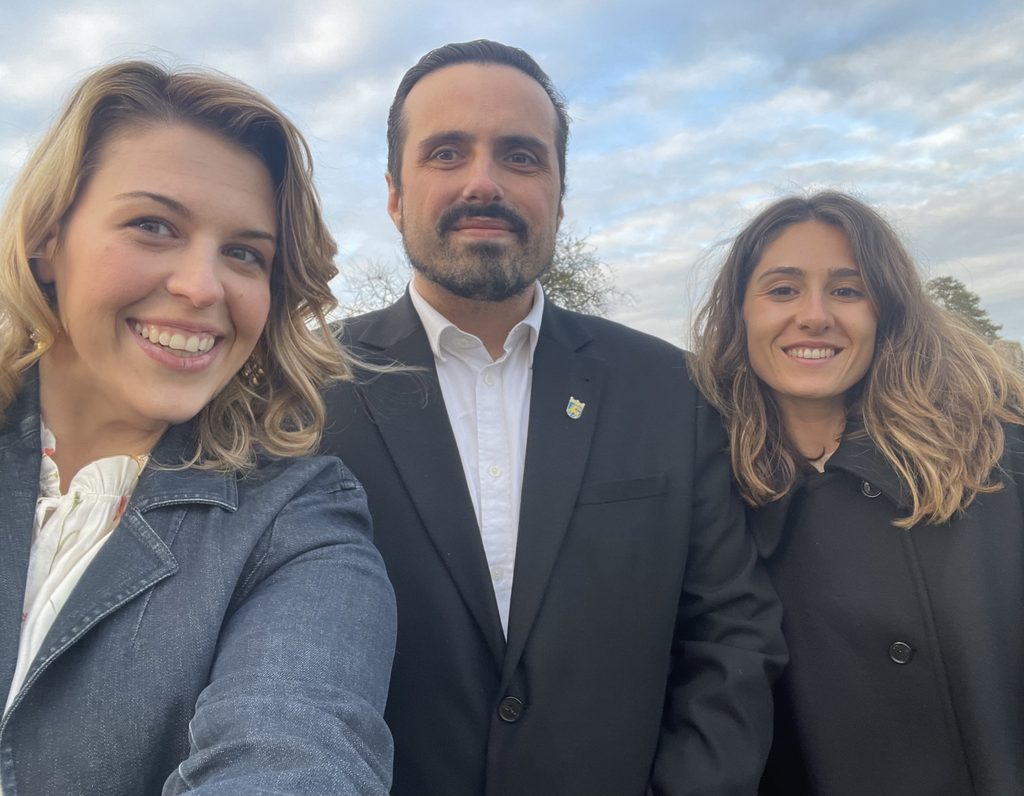
And another. This was another moment of non-participation where Micke had a family birthday committment the evening 9 May 2025 so I took charge of keeping company with Claudia Garcia Zaragoza, Everyone Can Flourish project leader from UN-Habitat, accompanied by Minister Arsim Zekaj. We took this picture near Bomarsund after dinner together. She also gave an interview to Ålands Radio during her brief May 2025 visit.
Mr Larsson has some explaining to do here too. I did not, I assure you, infiltrate the photograph Ålands Radio took during our interview about the very international work from which my role is now being so carefully edited. Nor did I commandeer a James Bond speedboat to Kobba Klintar, smuggle my authored material ashore and slip it unnoticed into a pile on the picnic table. And I certainly did not kidnap Minister Zekaj and force him, in his own vehicle, to drive the project leader and me out to Bomarsund.
Either my participation was known, invited and organised, or the Government of Åland suffered the most sustained and picturesque security breach in its entire history.
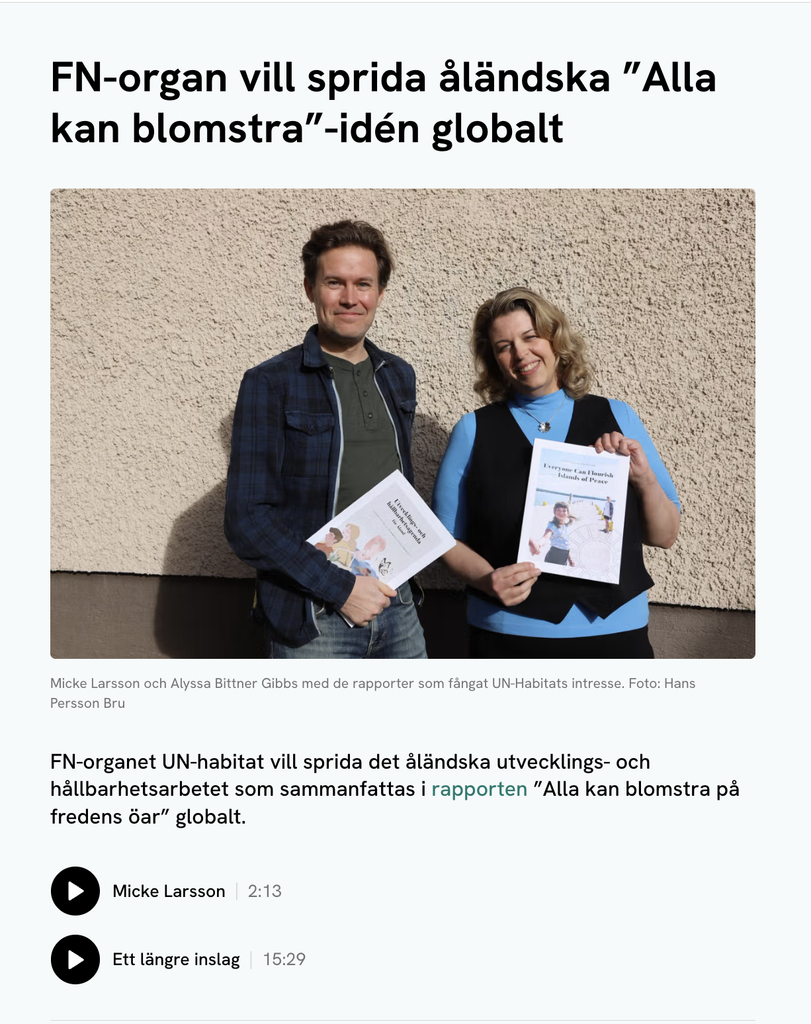
I was apparently also such an international mover and shaker that, when Mr Larsson could not attend an online roundtable the 28 March 2025 because he was in Brussels for an EU-related commitment, I stepped in for him despite I was off on Fridays and then, through powers yet to be explained, caused UN-Habitat to feature me on its social media.
Another astonishing feat of unauthorised international cooperation.
At this point, voters should consider the evidence. I substituted for senior leadership at a UN roundtable, appeared in UN-Habitat’s public communications, materialised at Kobba Klintar with authored material and obtained ministerial transport to Bomarsund, all while apparently having no meaningful role whatsoever in the international work.
Clearly, I am the kind of woman who gets shit done. You should probably elect me to something. Imagine what I could get done with actual power, an office and people willing to admit I was actually in the room.
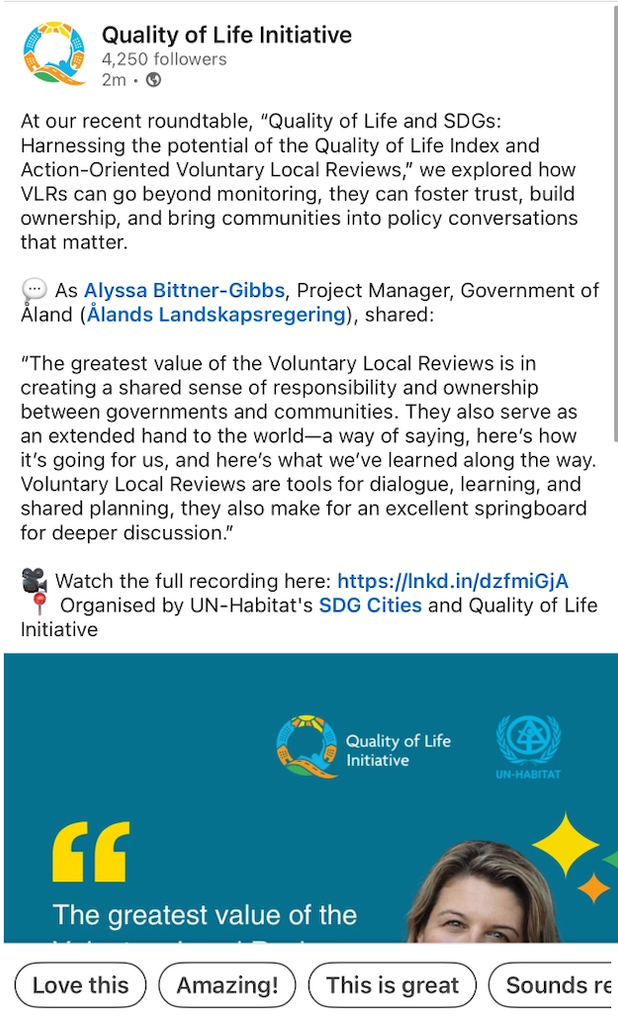
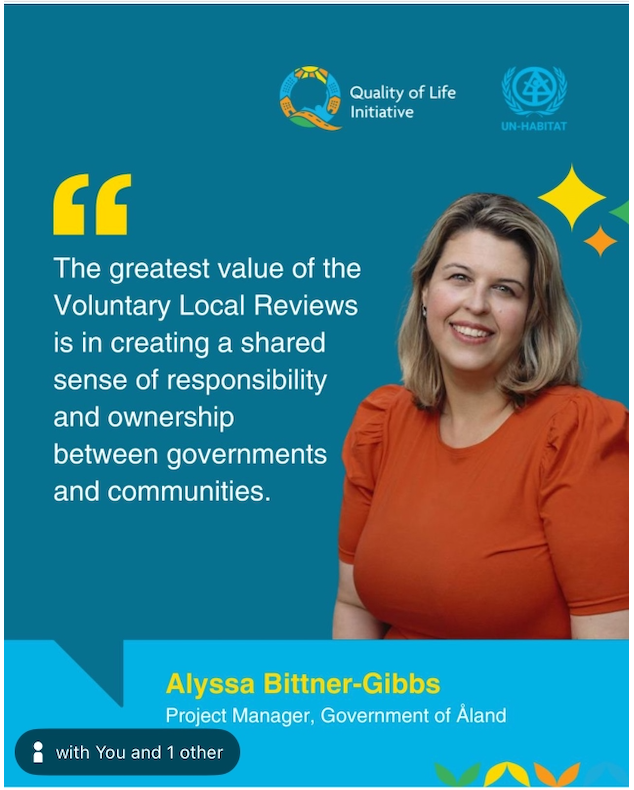
And there is plenty more where that came from, folks: emails, meeting invitations, photographs of whiteboards from strategy sessions, further exchanges with the lead author, and a recommendation letter from that same lead author. The documentation is, frankly, absurdly good. My lawyer was impressed.
But perhaps it is worth explaining why.
I did not preserve these things because I expected a dispute, although some *cough* flummiga discussions made me think that certain messages might be good to hold onto. I preserved them because this is how I work. I am a systems thinker with ADHD. Complex projects do not remain safely inside my head, so I build an external memory for them and connect the dots. I photograph whiteboards so I can return to the room later and translate the conversation into diagrams. I keep meeting invitations because they locate people and decisions in time. I keep messages because collaboration is built from dozens of small agreements that everybody remembers right up until remembering becomes inconvenient. Those photographed messages also help me use generative AI when I am on the go to write messages quickly rather than slowly type them out on my mobile.
The photographs were not evidence when I took them but tokens for social media. Some were working material. The invitations were not exhibits. They were how I knew where to be. The messages were not collected for a future fight. They were the collaboration.
The record exists because I took the work seriously with a lot of love.
The bitter joke is that the same habits that made me useful have now made me impossible to erase. I did not set out to become the archivist of my own erasure. I was just trying to do good work.
Said paper trail is no longer a trail. It has lane markings, street lighting and a plausible claim to infrastructure funding.
Denying my involvement now requires a considerably more elaborate and implausible theory: that I invented an international role and then somehow persuaded civil servants, ministers, journalists and UN consultants to spend months generating contemporaneous evidence in support of it.
If I can fabricate an international collaboration that administratively coherent without a title, a budget or actual power, my earlier recommendation stands:
Elect me to something. Seriously.
There is also a structural problem with saying that work fell outside my assignment. If it was genuinely none of the Government’s business, the Government later developed an intense interest in controlling what I did about it.
Patience, my friend, you will see that in the correspondence soon enough.
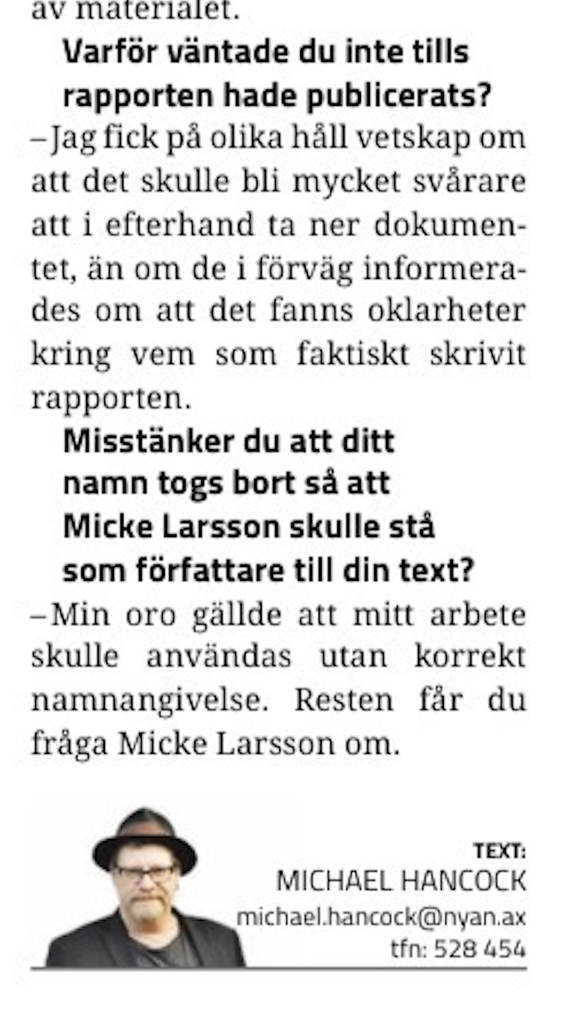
But the absolute most revealing moment in the interview concerned a question previously put to me by Nya Åland: did I suspect that my name had been removed so that Larsson could appear as the author of my work?
I did not answer yes.
I said that my concern was what happened to my work, and that the rest was a question Micke Larsson would have to answer himself.
This was an excellent opportunity for him to merely answer with a terse Nordic
Nej.
In the radio interview, Larsson was nevertheless sufficiently surprised by the allegation I had not made that he denied it twice, broadened the denial to every employee of the landskapsregering and rewrote the contribution process for good measure.
He said:
Så det har aldrig någonsin varit aktuellt att jag skulle vara författare.
(English translation: It had never, ever been contemplated that he would be an author.)
This was a rather comprehensive rebuttal to an allegation I had declined to make. Hmmmm.
Apparently, I was not merely expected to refrain from accusing him. I may also have been expected to clear him. I was not willing to make an allegation about another person’s motives that I could not document either way.
By declining to speculate about Larsson’s motives, I left him with the burden of explaining his own conduct. This seems to have been unexpectedly unsettling to him.
But in light of the details above and how he describes my involvement, is it no wonder that I left him to explain himself? As he has left me with the burden of explaining many things I never, ever should have had to explain?
His answer does not establish what happened to my material. It establishes only that he denies one possible motive for it. The authorship, citation and use of the material remain exactly where they were before he answered.
Then we reached the Government’s non-position.
According to Larsson, the Government of Åland had not taken a position in the copyright dispute.
They were merely position-shaped communications I received in April, May and June containing the Government’s preferred account and mandatory instructions concerning my behaviour. These emails contained conclusions about my role, instructions concerning whom I was permitted to contact and warnings about the risks created by my conduct.
But they should not be mistaken for a position!
A position would presumably have required the Government of Åland to accept responsibility for holding it.
To give you a preview, on 29 April, the förvaltningschefen instructed me not to contact UN-Habitat or the lead author. The email rejected my asserted status, framed further contact as a risk to the Government of Åland and did not in any way invite a discussion about citation, attribution, correct removal or any other possible resolution.
The Government had no position, but an awful lot of instructions.
Perhaps the Government means that it never made a formal legal determination of the ultimate copyright question. Quite right. The Government of Åland is not the Market Court and has absolutely no authority to adjudicate the dispute, especially as it is a party to said dispute.
It might, however, have consulted an intellectual-property lawyer before issuing instructions built upon easily proven false categorical assertions about authorship, contact and institutional risk. If it did, the advice left no visible fingerprints. The correspondence is sloppy where the law requires distinctions and categorical where the facts required inquiry.
It is hardly the work of a legal mastermind.
But an institution does not become neutral by refusing to use the noun after practising the verb. It rejected my asserted status, instructed me not to contact UN-Habitat or the lead author, invoked risk to the Government of Åland and actively participated in the publication decision.
That is a position in practice, whatever terminology it prefers afterwards.
If I were recording the exchange as satirical administrative minutes, the entry might read:
No position was taken. The person concerned was merely instructed to behave as though one had been.
On 1 July, UN-Habitat Legal informed me that the Government of Åland had participated in the decision concerning the publication.
Apparently, participating in a decision is not the same as taking a position on it.
Somewhere between those two formulations lies an entire postgraduate course in administrative metaphysics. Institutional neutrality has rarely been so busy.
Finally, the reporter asked the obvious question that is burning on everyone’s lips:
Why had nobody found a solution that would allow the report to be published?
Larsson replied:
Bra fråga. Jag vet inte.
(English translation: “Good question. I don’t know.”)
The possible solutions were not obscure. Credit the contribution accurately. Cite the material. Use an author note. Agree upon another formulation. Remove the material if no acceptable basis for using it could be found.
And I was willing to discuss all of these possibilities and made that crystal clear through my lawyer. I was willing to consider a menu of acceptable solutions. Or at least receive some information, which was not forthcoming either.
But any solution required someone with the authority to discuss it. By the Lantråd’s and Larsson’s own repeated account, that authority belonged exclusively to UN-Habitat: it was the publisher, and it alone decided whether and how the report would be published.
I was then given obviously coercive instructions not to communicate with UN-Habitat or the lead author from a very adverse Government of Åland.
The approved route to resolution was therefore clear. I was expected to reach an agreement with the only institution capable of making one without communicating with it.
Perhaps telepathy was part of the toolkit.
This was not a conversation that mysteriously failed. It was a conversation the Government expressly ordered me not to have.
This is an admirably efficient model of unsuccessful dialogue.
- First, prevent the conversation.
- Then, express uncertainty about why the conversation produced no solution.
Failure is guaranteed when one party is instructed not to speak and the other parties later wonder why no agreement emerged. Compliance appears to have been the preferred form of consensus. But silence or compliance does not produce permission in a copyright dispute.
The process makes considerably more sense if a solution was understood not as something to negotiate, but as something I would eventually accept. The institution had authority, access, time and money. I had the contents of my bank account.
And yet, the math did not math.
I was also reminded repeatedly that I did not represent the Government of Åland.
Correct. That was never in contention.
I had left my role many months earlier. The lead author knew this perfectly well, remained in direct contact with me and had written a recommendation intended to help me into whatever came next. I was not speaking for the Government. I was speaking in my own name about my own work and my own human rights found in Finland’s Constitution.
Yet the same Government that insisted I had no authority to represent it claimed the authority to represent my position to UN-Habitat. It communicated about my authorship, participated in the decision affecting my work and instructed me not to contact the publisher myself.
The apparent rule was:
You do not speak for us. We do, however, speak for you.
Agency becomes less decorative when a real human being uses it to say:
No.
That is when the language changes. A contributor becomes a former employee. Original writing becomes material. An international role becomes local work. A government position becomes a private dispute. An attempt to obtain dialogue becomes a risk. A refusal to comply becomes the cause of the project’s failure. The person gradually disappears from the grammar, leaving only an inconvenient situation that apparently arose by itself. This is why the dispute cannot be reduced to whether an employee had been assigned the job title “author of the UN-Habitat report.”
The deeper question is what institutions do when someone they have treated as a useful object insists upon becoming a rights-bearing subject.
Do they stop and listen? Do they examine the documentation? Do they distinguish among the available solutions? Do they recognise the imbalance of power and act with corresponding care?
Or do they attempt to restore order by rewriting the person’s role, restricting her contact and waiting for the cost of resistance to teach her where she belongs down there?
So much for Nordic egalitarianism.
The Government could explain its own interests and advance its own claims. What it could not do was convert my lack of authority to speak for it into its authority to speak for me, while forbidding me direct access to the only institution that could resolve the matter.
That does not logically follow unless you feel you are entitled to unquestioning obedience from a citizen despite living in a democracy. And this is why I have to say I am now far more concerned about that more than this fracas around a publication.
That is why I am choosing to engage. It means that much to me.
So to review, because I think we all need one:
- Ålands Radio contacted UN-Habitat, which referred its questions to the Government of Åland.
- The Government of Åland stated earlier that only UN-Habitat could decide over the publication and therefore, de facto, was the only institution that could answer the questions about the publication.
- The Government had reportedly taken no position, and
- its Secretary General of the Development and Sustainability Agenda did not know why no solution had been pursued.
The international collaboration may be paused, but the referral system appears to be fully operational. Responsibility had been distributed so carefully that nobody appeared to possess it. The question travelled from Åland to UN-Habitat and back to Åland, completing a small masterpiece of circular administration from Nairobi to Mariehamn.
What Ålands Radio could not locate was anybody with jurisdiction over the consequences.
And that’s the system working exactly as designed, by the way. Larsson may not know why the door was closed. But he was nevertheless standing in the hallway and responsible for communicating developments to all parties.
The phrase “object of study” is doing some real conceptual work here.
An object can be observed, interviewed and described. It can supply useful information. It can be placed within somebody else’s framework and converted into findings.
But a subject speaks in her own name.
A subject possesses authorship, judgment and agency. A subject can withhold consent, challenge an account and require a public institution to recognise that another human being exists on the opposite side of its decision.
A public institution has enormous power to define what counts as work, whose contribution is recognised, who may speak to whom and which account of events becomes official. That power does not disappear because its exercise is described as neutrality. Nor does an instruction stop being coercive because the institution issuing it later says it never took a position.
Instead, the entire Everyone Can Flourish process supplied a case study in how an institution can convert a person into an input, a means to an end, a disagreement into a risk and a decision into nobody’s position. History is filled with mindsets like these that have led to far greater tragedies than a missing byline. I hope I do not have to renumerate them for you.
Which is why the matter is not just about copyright. It is perhaps even more about democracy and institutions respecting the rule of law.
It is beyond a doubt about social sustainability.
Most institutions are enthusiastic about agency in principle. Agency is a central component of flourishing, participation, democratic legitimacy and almost every modern sustainability presentation. From the everyonecanflourish.org website, which IS taxpayer funded and contains deriative reliance from my work, by the way:
Instead, we design for capable agents whose engagement and sense of responsibility are essential to any shared endeavour.
The sentence found in “Step Four” is a rather elegant condensation of the active-agency and shared-responsibility framework I developed in the local White Paper I wrote in my home and carried into the chapter I provided for the international publication. That framework does not appear in the earlier Voluntary Local Review. Apparently, I had nothing to do with the international work. However, my protected expression, under Finnish law, seem to have travelled extensively and remains up even today.
The author of this concept asked for recognition, a conversation and a lawful solution. The institution responded by redefining her as material and responsibility as somebody else’s department.
Åland was indeed an object of study. But Åland also supplied material, and it was people on Åland who created that material in the context of a project around human flourishing. Research objects do not usually write ten pages, attend authorship discussions, receive confirmation from lead authors or hire lawyers when institutions decline to have conversations.
Buildings don’t hold pens. But human beings do.
Treating people like objects is quite the opposite to treating them like actual people with rights, which is perhaps why this project may have always been destined for failure.
And the responsibility has not disappeared. It has simply been contributed anonymously.
To leave me, the human author and her family holding the bag and bearing the greatest human consequence of all.
The deepest pattern is the same one that appeared in the first public discussion.
Achievement can be collective, international and spacious.
Responsibility becomes narrow, technical and mysteriously unavailable.
Åland was the object of study.
By the end, it had also supplied some incredibly depressing findings.
Comments