


On anniversary entertainment and the sustainable postponement of responsibility
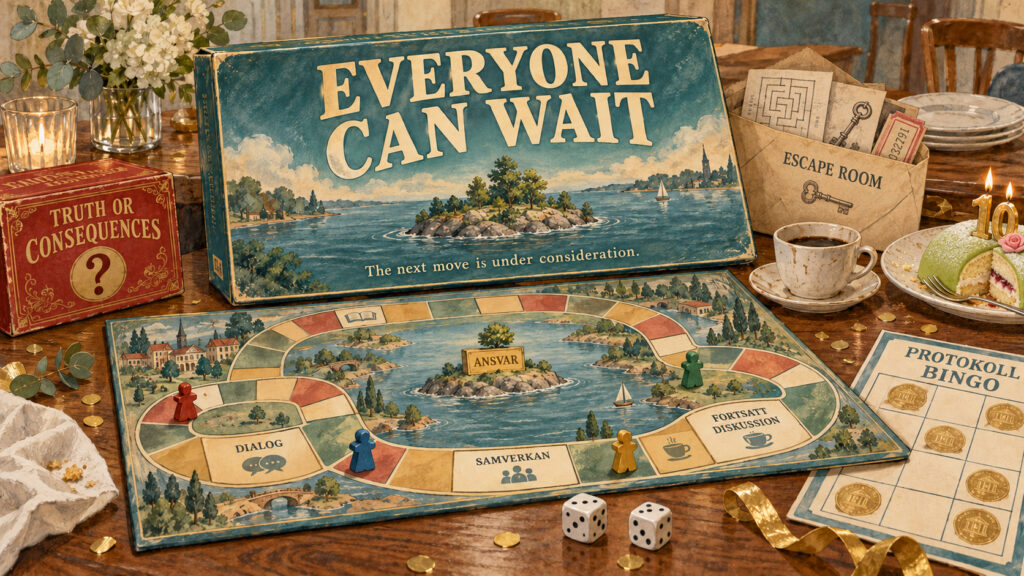
B I N G O.
Twice, no less.
The minutes of the Development and Sustainability Council’s meeting on 23 September have arrived. Readers of Everyone Can Agree may retrieve their cards.
Different views were expressed. The division of responsibility needed clarification. Who would now fix the listening problem remained unspecified. Working methods needed development. The chair thanked everyone for good discussions.
Top left to bottom right. And straight down the second column.

Now, they did not reproduce my bingo card word for word.
One appreciates an institution willing to contribute original material.
But they also contributed something I had failed to put on the card. After three hours together, the Council ran out of time for its agenda item on governance and responsibility.
Two complete lines. Still no time for responsibility.
I had allowed for responsibility to be redistributed. I had not anticipated that it would be rescheduled.
There is a certain boldness involved in combining an anniversary celebration with a governance meeting the day after publicly rejecting the suggestion that your institution has a culture of silence.
Especially when the reassurance concerns your efforts to make it easy for people to speak.
Well.
They appear to have taken that rather literally.
On 22 September, Micke Larsson told Nya Åland that he did not share the picture of a culture of silence in Åland’s sustainability work. On 23 September, the Council gathered at Ålands Näringsliv to mark the Agenda’s tenth anniversary.
The resulting protocol records that some members do not always feel heard, that greater responsiveness is needed, and that sufficient time should be available for everyone to speak.
An interesting development in the space of a mere twenty-four hours.
The problem with inviting people to celebrate ten years of your work is that some of them may arrive with ten years of experience of it.
The anniversary entertainment
For a tenth anniversary, one would normally suggest cake. Perhaps a little music.
But what kind of anniversary entertainment would go with a meeting like this one? Perhaps a Micke-shaped cardboard piñata made entirely of recycled strategy documents?
Sustainably sourced, naturally.
Hear me out.
Everyone gets a turn. Frustrations are acknowledged. And participation produces a tangible result.
At last, a concrete exercise in stakeholder engagement.
With sufficient collective effort, something previously concealed inside the organisational structure might finally emerge.
I would fill it with answers!
You know, give the guests something genuinely unfamiliar to look forward to.
Should nothing emerge, an independent panel could examine whether participants had misunderstood the purpose of the piñata.
But then I thought, maybe an escape room would have also been an appropriate entertainment.
The protocol certainly offers the reader one.
Your task is to establish what the Council understands its own role to be. You have three hours, a sustainability vision and a room full of representatives from different parts of society.
Somewhere in the room is an answer. The clock is ticking.
The first clue appears under item three. Someone has requested clarification of the Council’s role. Fortunately, the document supplies directions: this belongs to the matter of governance and responsibility under item five.
Excellent. Now we are getting somewhere!
Proceed to item five.
På grund av tidsbrist bordlades ärendet.
The item was postponed because time had run out.
Congratulations. You have unlocked December.
The next ordinary meeting is scheduled for 15 December. I had not realised an escape room could require an overnight bag and a change of season.
Minna Hellström is recorded as having left at eleven. The protocol does not say why. Whatever else remained uncertain, the location of the exit had evidently been established.
Her later interview on Ålands Radio gives us rather more to think about than the clock.
Minna described to Ålands Radio how criticism can be explained away or lead nowhere, until silence starts to feel easier. She also questioned the Council’s governance and described a response more concerned with defending the system than understanding the criticism.
Its thirty-first ordinary meeting, incidentally. The Council’s role still required clarification.
By the thirty-first meeting, most book clubs have at least agreed which book they are pretending to have read.
For half an hour, the Council received visitors from the Lagting, an institution where disagreement occasionally proceeds as far as a vote.
A promising opportunity for an exchange of best practice.
Four parliamentarians had been invited. Two could not attend because the Lagting was in session.
Democracy had encountered a scheduling conflict with itself. On a small island, there are only so many people available to scrutinise the arrangements before they must return to participating in several of them.
Those who showed up, Nina Fellman and Wille Valve, presented their perspectives. The Council then discussed them. Whether either perspective survived the return journey into the Council’s own governance arrangements remains difficult to establish.
A thoughtful anniversary guest list. Some people bring flowers. Others bring an alternative account of whether the last ten years have gone particularly well.
Here, the public photographs on Jörgen Pettersson’s social media account offer a useful supplement to the administrative prose. Nina appears to be attending an anniversary. Wille appears to be attending the meeting.
Every institutional celebration should include somebody who looks as though he has read the supporting documents.
Here, the photographer had inadvertently included a minority report.
Subject to availability
John Eriksson, the government’s förvaltningschef, was unable to attend. His designated substitute, Michaela Slotte, attended in his place.
Two days earlier, I had published his correspondence with me in full in The Buck Stops Here.
The buck stops here. Subject to availability.
Missing the tenth anniversary means missing the cake. More importantly, it also removes the risk of someone putting down their fork and saying,
So, John… About those emails.
You can always ask your deputy to save you a slice. Asking her to explain your correspondence is a considerably bigger favour.
The minutes give no reason for his absence. They do establish that a meeting which reached both the failed publication and questions of governance proceeded without the senior administrator whose own instructions were now publicly available on this website and a topic of discussion on Nya Åland.
A deputy can represent the administration. The principal still owes an account of his own decisions.

A culture of silence in governance can also be sustained by people with authority becoming unavailable when others have questions. Permission to speak means little without an obligation to answer.
Everyone Can Speak. But apparently, answering is optional.
Who has the keys
What should this Council actually be able to do?
At a minimum, its members should know what their participation means. Receiving information, offering advice, approving a proposal and accepting responsibility for a decision are different activities. Someone should explain which is taking place before everyone lends their name and standing to it.
The relationship between the Council, its chairing trio, its secretariat and the government should be intelligible to the people in the room and the people outside it. Members need to know who authorises the work, who supervises it and who can require an answer when it goes wrong.
A seat at the table should come with enough information and independence to exercise judgment. Members should be able to question the framing of a problem and pursue a concern beyond the explanation supplied by whoever prepared the proposal.
Otherwise, we have assembled a remarkably distinguished audience.
If you are not from here, you should know that on Åland six degrees of separation is an exceedingly ambitious development goal.
Accountability has to work among people who know each other.
People you have supported must be able to question you.
You must be able to question them.
Those questions need answers, however many boards, anniversary cakes and mutual acquaintances you share.
Jörgen Pettersson published his reflections on the day of the meeting. Inspiration enjoyed express delivery. The minutes remained on back order until four weeks later.
Clearly writing was possible. The inspirational interpretation had simply overtaken the account of what actually happened.

His account borrows Tarja Halonen’s image of a house with seventeen doors, allowing different routes into the same undertaking. A generous provision of entrances.
But eventually, somebody will have to explain who owns the keys.
He also acknowledges falling public awareness. After ten years, the work is apparently becoming so deeply embedded in society that society can no longer find it.
Perhaps the eleventh anniversary entertainment could include a treasure hunt.
Jörgen invokes Dunning–Kruger and, fairly, includes insiders’ blind spots. However, I think the next stage of intellectual humility is allowing somebody else to point to one without immediately prescribing them more curiosity.
Occasionally, the person asking an awkward question has actually already done the reading. That is what made it awkward.
An institution worthy of public trust needs ways of testing its own confident accounts, including those of the people who have spent years building it.
The seventeen doors are a promising start. But methinks we might also require a window.
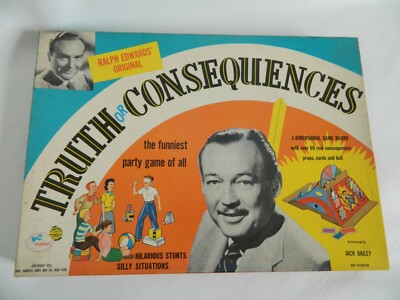
Truth or Consequences
Josefine Egenfelt appears to have brought a different party game.
Truth or Consequences.
At her request, Micke gave a brief update on the cooperation between UN-Habitat and Åland. The report intended for publication in the spring will not be published because copyright questions arose.
One might almost imagine that texts had authors. An unexpected complication in the international publishing sector.
The protocol’s phrase is
upphovsrättsliga frågor aktualiserades.
“Copyright questions arose.”
Like a sudden rain shower in spring. Or a patch of fog off the coast of Bomarsund. An Act of God.
Force majeure. A rather continental way of saying “the author was well documented.”
In fairness, I had emailed ahead.

Thank you, Josefine. Asking what became of a project previously presented to the Council seems an imaginative use of membership. Jörgen has been recommending curiosity. One hopes his enthusiasm extends to the questions people actually do ask.
Perhaps the critics have been curious all along. Perhaps what they lack is answers.
Although it WAS rather inconsiderate. I mean, people were trying to have an anniversary and enjoy some cake, damnit. Tsk, tsk.
But the cancellation now has a place in the record. And that matters.
What the minutes do not record is an examination of how the work reached this point, who had been responsible for addressing the rights questions, or what the Council expected to happen next.
The truth occupied a paragraph.
I had always understood Truth or Consequences to be one game. The Council’s innovation is to offer the components separately.
Please book well in advance for the second.
Here, governance has actual work to do. The Council should distinguish the fate of the publication from the status of the wider initiative and establish who is responsible for whatever continues.
Getting a subject discussed is a first step. Getting an adequate account is another.
This is where the piñata would prove an inadequate governance model.
Taking turns expressing frustration with Micke would leave the decisions, supervision and institutional support through which the work proceeded largely unexamined. A secretary receiving a reported monthly basic salary of €5,411.97 should be able to account for his work. Those who commission, authorise and oversee it should be able to account for theirs.
Collective responsibility should give us a more complete account of what happened. It cannot simply make the account less personal until nobody is left in it.
What a perverse way for a human flourishing initiative to explain itself.
People have names. Work has authors. Decisions are made by people with authority to make them.
Removing those people from the account erases both responsibility for the decisions and the person whose work and rights were at stake. Everyone becomes less visible, except the institution, which remains available for congratulations.

There was no shortage of human agency when instructions were being issued.
It should not become impossible to locate once those same instructions require an explanation.
Vague, sweeping answers erode public trust because they deny listeners what they need to assess the account. Council members cannot scrutinise a decision that has been described out of existence. The public cannot judge a response if the conduct that prompted the question never appears in it.
A rights-holder becomes “a copyright issue.”
A decision becomes “an unfortunate development.”
A cancelled publication becomes something that happened to everybody and was done by nobody.
One might almost admire the efficiency if it wasn’t so grotesque.
Yes, grotesque.
Human agency has been removed from an initiative about human flourishing without so much as a consultation.
And who does that serve in the end?
Trust requires an account that can survive questions: which decisions were made, what reasons supported them, and what will be corrected.
An uncomfortable answer can be inspected. A sweeping assurance is really demanding deference.
Contrary to what Jörgen asserts, the institution is communicating. All the time.
People learn from what happens to their questions, whose discomfort matters and what it costs to keep asking. The silence that follows may simply be people deciding that another question is pointless.
And they go silent.
Counting that as agreement would compound the insult. Minna’s later interview should have cleared up any remaining confusion.
A flourishing vision ought to recognise people as authors and rights-holders even when acknowledging them is inconvenient. It ought to be able to admit that a person with less institutional power can be right and a senior official can be wrong.
If its humanity expires when someone challenges those administering it, the vision has become a means of protecting hierarchy.
Human flourishing. With the humans redacted.
Sit with that a bit.
If you do, it will become clear to you that the institution’s repeated choices are becoming a more convincing statement of purpose than its vision.
Please note the information
There is a substantive acknowledgment in these minutes, and it deserves to be recognised. Some members do not always feel heard. Greater responsiveness is needed, along with enough time for everyone to speak. The value of different perspectives is expressly emphasised.
Good. That belongs in the record.
The chairing trio’s earlier work on internal improvements, including a survey, is also recorded. So the institution has more to offer than an entirely blank expression and a fresh pot of coffee.
But members’ concerns about being heard still require an answer they can recognise as an answer. When does someone get to say that the arrangements are still failing them without starting the entire conversation again?
A survey can collect the answers. Someone still has to act on them.
Being heard cannot mean that everybody gets their way. Councils exist partly because people have different interests and judgments. A member may raise a serious objection and still lose the argument.
But it should be possible to follow what happened to that objection. What answer did it receive? Did it change the proposal? What remains disputed? If someone promised further work, who will do it and when will the Council return to it?
Members should be able to recognise their contribution in that account even when they disagree with the outcome. The public should be able to see what the institution did with the knowledge its representatives brought into the room.
Otherwise, society supplies the perspectives and the institution supplies the conclusion. An economical division of labour, provided nobody mistakes it for collective judgment.
The proposed contents of the next status report offer another small pleasure. Seven experts will assess progress across the strategic goals.
Recommendations for action: possibly.
Accounts of municipal implementation: possibly.
The Council’s opening words have, reassuringly, already secured their place.
We may emerge without a recommended course of action, but nobody will have to wonder whether the Council would like to say a few words.
Experts can help establish what is happening. The Council then needs to show which findings require action and how it will follow up. Where it cannot decide, it should be clear about whom it is advising and what response it expects.
Give the Council’s judgment somewhere to go, then check whether it arrived.
Business and pleasure
The Council had three hours together. It discussed substantial subjects, received updates and arranged another meeting.
Members asked for sufficient time to be heard. The agenda item on governance and responsibility subsequently encountered the same difficulty.
Perhaps in December they could be invited as external guests. They might then qualify for a protected slot.
This is the difficulty with combining business and pleasure. You may have booked the room for a celebration, but the people you invited can still turn up with business.
Particularly when the unfinished business is yours.
The Council now has an opportunity to become a place where independent judgment changes the work, a difficult question produces an answer someone can inspect, and failure leads to identifiable correction. Its broad membership could help it discover what its leadership has missed. Its continuity could preserve lessons rather than simply preserve arrangements.
December would be a good time to put governance first. Circulate a clear account of who can decide what. Give unresolved questions a named person responsible for returning with an answer. Record what will change, then come back to it.
That would be worth sustaining. It might even improve the atmosphere at the next anniversary.
For December, I suggest a slightly different escape room. The participants can only leave when they have established what they can decide, who must act and how they will know whether anything changed.
Seventeen doors. Surely one of them must open onto an answer.
I have only asked who was responsible. But I fear it appears that I have been referred to an architect.
The meeting ended at noon. The chair thanked everyone for good discussions.
I do hope everyone enjoyed the anniversary.
Everyone can flourish. Responsibility can come back in December.
Comments