

Author’s note: This reflection was first written at the end of 2024. The language of roots, flowers, and the conditions that make flourishing possible became one of the paths into my later thinking about values and capabilities. That thinking was developed more explicitly in very early January 2025 and incorporated into my local sustainability writing that later was shared into the process with UN-Habitat. The original reflection came first; the conceptual framework followed.
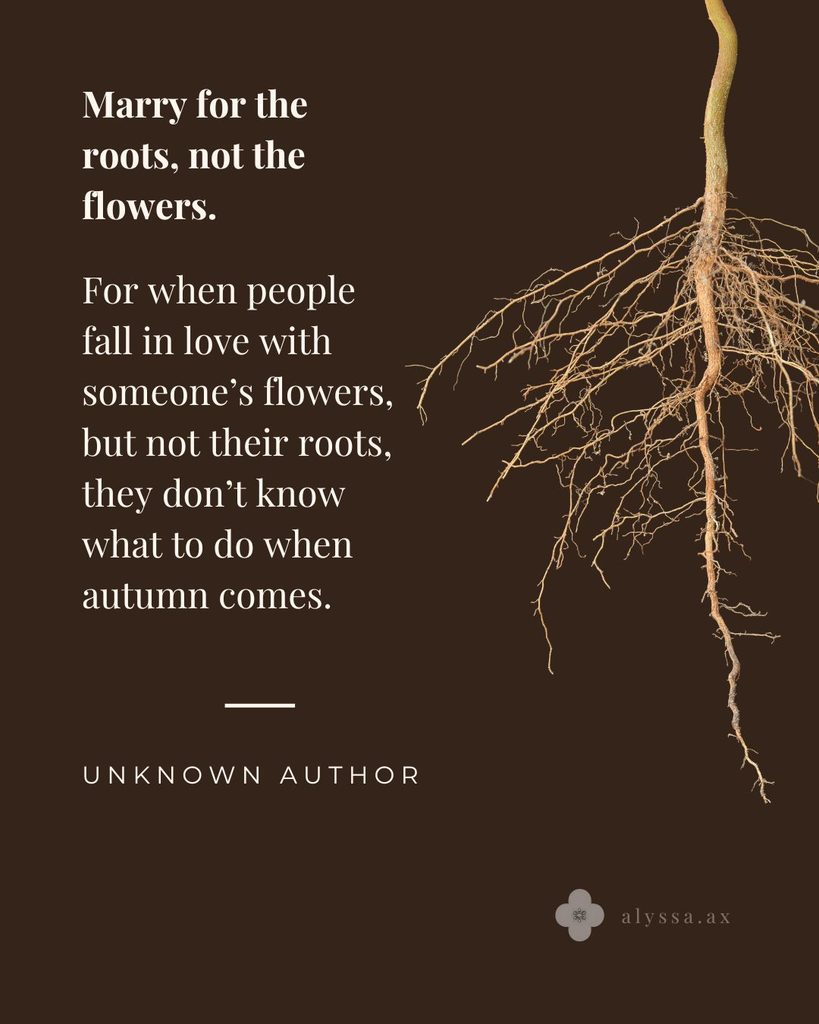
There’s a quote of uncertain origin I’ve been reflecting on:
When people fall in love with someone’s flowers, but not their roots, they don’t know what to do when autumn comes.
This year often felt like a long autumn stretching into the quiet darkness of a Nordic winter.
Flowers are easy to love. They are the visible things: laughter, beauty, companionship, shared values, celebrations, photographs, the moments when life seems to be opening rather than closing in.
And those things mattered this year. The joy in my photographs is real. The laughter was real. The beautiful days were beautiful.
But they were not the whole story.
There were also uncertainties and insecurities I did not put on social media. Periods when it was difficult to fully exhale. Times when much of the work of living happened quietly, underneath everything anyone else could see.
That is where the roots are.
They are the things that remain when life is not especially picturesque: love, family, values, endurance, belonging, the accumulated strength of a life built together.
My husband and our four children have been at the centre of that life. Children, in particular, are excellent protection against taking one’s metaphors too seriously. However existential the season, somebody still needs breakfast, cannot find a mitten, or has launched a constitutional crisis over whose turn it is.
Life insists on continuing.
Perhaps that is part of what roots do too.
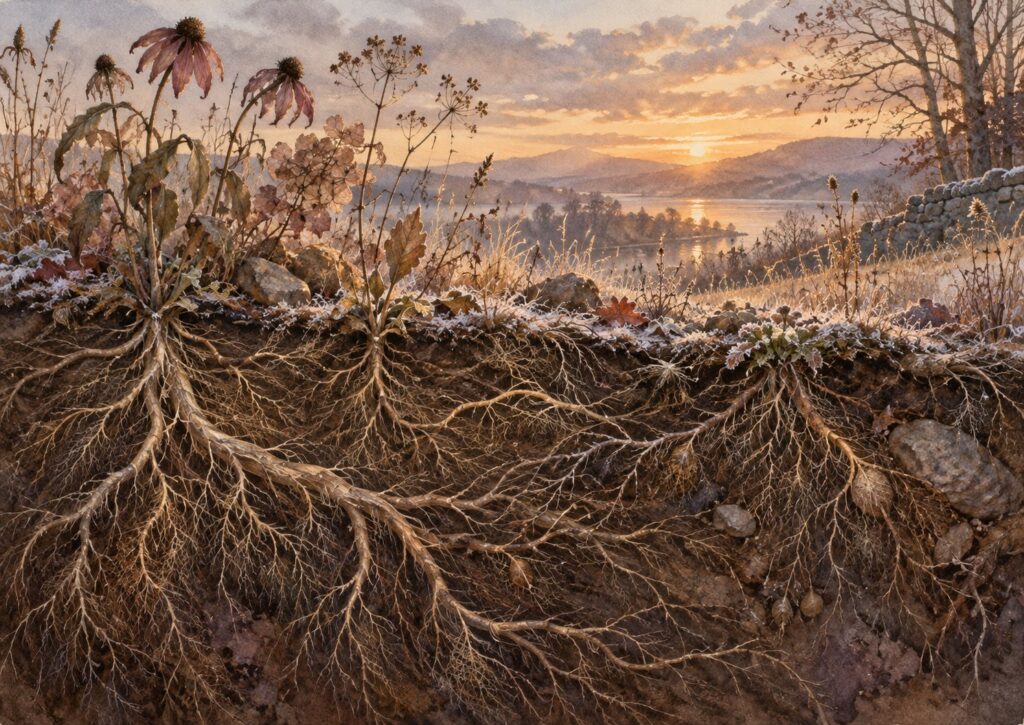
Above ground, a plant can appear dormant. Nothing spectacular is happening. No one is admiring it. But underground, it is still alive—holding, adapting, reaching, preparing for whatever comes next.
I have thought a great deal this year about what allows people to flourish.
We tend to notice the flower.
Less often the conditions beneath it.
But flowers do not appear because we order them to bloom. They depend on soil, light, water, space, time. When those conditions are poor, demanding prettier flowers is beside the point.
You tend the ground.
That thought has followed me increasingly toward the end of this year: that perhaps flourishing is not primarily about asking more of people, but about creating the conditions in which more of life becomes possible.
I do not yet know exactly where that thought is going.
For now, it is another root.
As we step into 2025, I carry this with me: the parts of our lives that are least visible may be the ones doing the most important work.
The roots we have grown together here on Åland—through family, friendship, memory, difficulty and love—have deepened this year.
Wherever life eventually takes us, they are ours.
And after a year of roots over flowers, I find myself looking toward spring with something quieter than certainty.
Trust, perhaps.
That beneath apparently dormant ground, something is already growing.
Comments