
On belonging, the courage to speak plainly, and staying with uncertainty.
Authors note: This essay was first published in Swedish in Nya Åland on 27 June 2025, as part of the summer guest editorial series Mitt Åland (“My Åland”). People who had moved to the islands were invited to write about the place from an outsider’s perspective. I wrote it nearly five years after my family and I arrived in August 2020. It appears here in English as I build alyssa.ax and return to its questions about belonging, the courage to speak plainly, and what it means to stay on Åland.
I had changed ferries on Åland once. That was all.
The world had already turned everything upside down when, in August 2020, we needed somewhere to land. So we moved to Åland without having seen it first.
My Sweden, where I had become a citizen barely a year earlier, had suddenly become a place where solidarity aroused suspicion, empathy was considered naïve, and questions felt like betrayal. Now I would have to begin again. Again.
I would turn forty in less than two months. Midlife is said to bring a crisis: fast cars or ill-advised love affairs.
For me: a moving van and tickets for the Rosella, bound for a question mark in a pandemic.
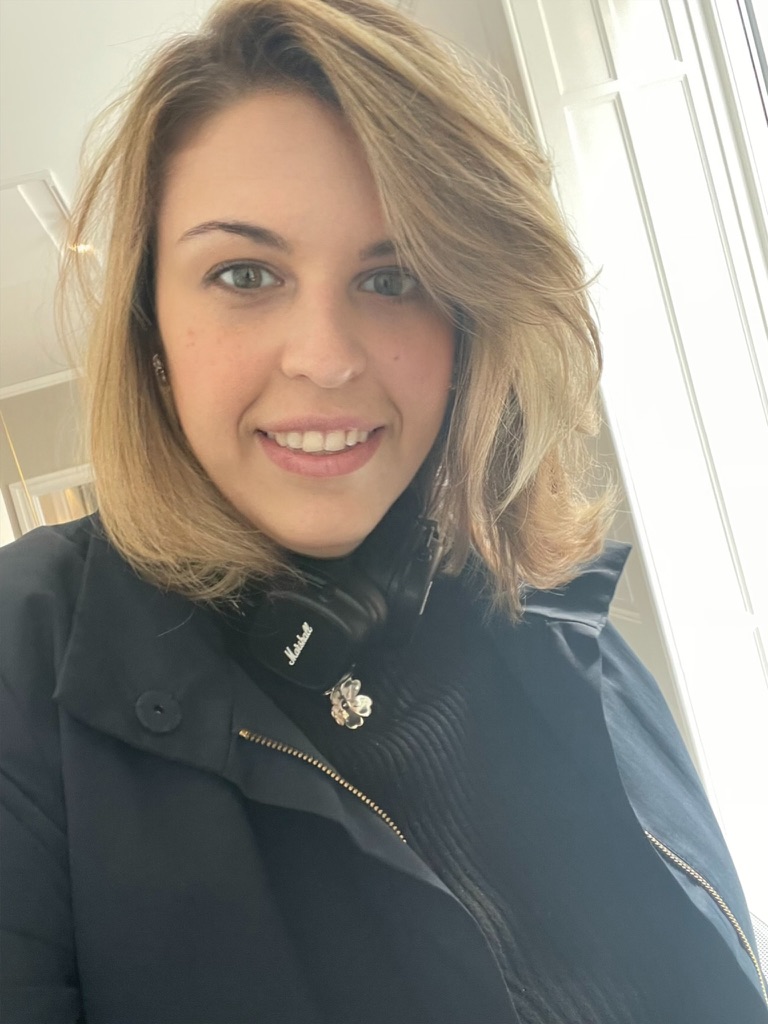
During those first weeks in quarantine, I unpacked boxes, took my daughters for late-summer swims, and tried to make sense of the decision we had made and carried through in barely six weeks. To clear my head, I walked the paths with headphones in my ears and my eyes on the sea.
But Åland found me. Neighbours tapped me on the shoulder. “I don’t recognise you,” they said, without ceremony, as I fumbled for my mask. “Where are you from?” “Are you staying?”
I answered: Sweden, originally the United States; yes, I speak Swedish; yes, I have two daughters and a husband. Then one said:
Good. We need people.
Not simply welcomed. Needed. There was curiosity, yes, but self-knowledge, too: we need people.
I liked that. No games. Just an honest hope that I might stay.
Later walks brought questions about how I spent my time, local tips, and always:
Do you like it here? Are you staying?
Nearly five years later, I am still here: older, pressed for time, perhaps wiser.
With twice as many children. Twin sons arrived in 2022.
Åland has changed me. Not dramatically. But slowly, tenderly, in the way that only staying can.
Staying when you do not know whether you are wanted as you are.
Staying even when the choice is far from certain.
Staying, not despite the uncertainty, but with it.
My Åland does not ask for perfection. Only presence.
It is full of paradoxes: generous, yet coded. Friendly, yet cautious.
It has taught me to slow down (sometimes), to listen for what goes unsaid, to let go of control.
With time, I have learned to recognise the difference between being invited in and being allowed to shape what happens there. Between being seen and being believed. Between being welcomed and being understood, although understanding does not always lead to belonging.
On Åland, the small scale sharpens the eye. Everything is visible. Everything matters.
That insight has shaped my work as a political scientist: seeing patterns, understanding how the parts affect the whole, giving language to the invisible.
It does not always make you popular, of course.
I do it not to criticise, but to understand more deeply.
I have learned that flourishing, real flourishing, is not a word to use lightly. Everyone wants it in theory. Fewer are willing to embrace what it asks of us.
It requires more than the right conditions. It requires real courage. The courage to ask difficult questions, above all of ourselves. To listen when someone says:
This isn’t working for me.
To make room for people whose place was never reckoned with.
And there, on the threshold of courage, many draw back.
We prefer harmony to tension, even when the harmony is superficial.
We choose silence over clarity, even when it confuses, even when it feels like abandonment.
We confuse friendliness with goodness.
So my Åland is neither a postcard nor a utopia. Nor is it a critique.
Åland remains a question mark.
What if flourishing were not only about holding on to what we love, but about remaining with what we have yet to understand?
What if we stopped seeing newcomers as rootless, and saw instead the riches of the places they carry with them?
What might we become if we chose clarity over code? Belonging begins with speaking plainly, even when doing so leaves us feeling vulnerable.
But clarity is only the beginning. Trust grows when presence follows words and respect is real.
What if we saw challenges as invitations to grow together?
What might we become if we cared for one another as we care for a garden?
My Åland is not a place, but a practice.
A question I live within.
I have no final answer.
Only a conviction: staying is a way of answering.
Comments