

On sweet alyssum, the people we love, and the conditions that let us flourish.
Low as the sweet alyssum flowers at my feet.
[…]
And you are quiet like the garden,
And white like the alyssum flowers,
And beautiful as the silent sparks of the fireflies.
I am uncommonly fond of flowers. My husband knows this and has occasionally used it to his advantage. So before any question of symbolism, there is this: the pleasure of their colour, their shape, their scent, and the entirely unreasonable amount of happiness they can bring me.
I also love that we bring them to one another. To celebrate, to show affection, to apologise, to sit beside someone whose loss we cannot possibly mend. Sometimes we arrive with flowers because arriving empty-handed feels unbearable, and words are no better equipped for the occasion. So we bring nature indoors and put something beautiful in water. It stays for a little while, asking us to notice it before it is gone.
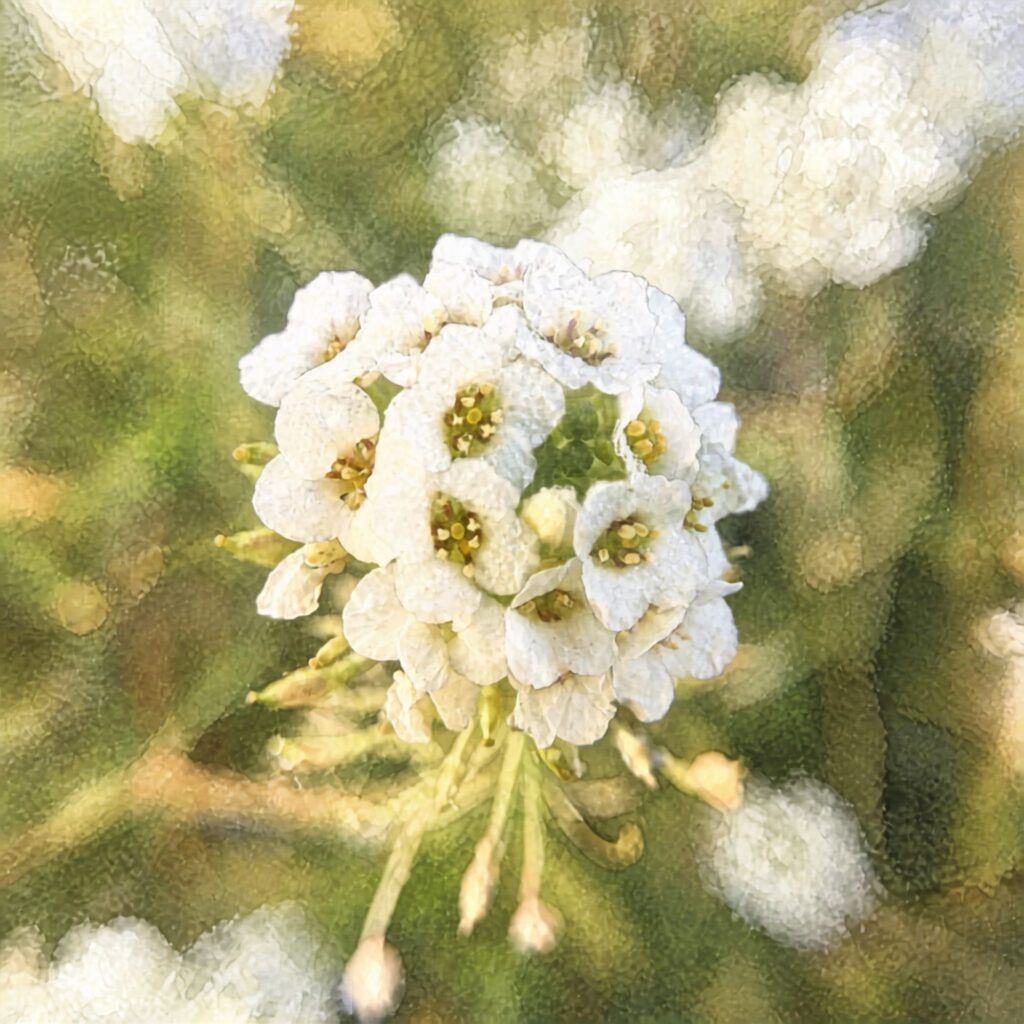
Then there is sweet alyssum (Lobularia maritima), called strandkrassing in Swedish, which has the additional advantage of a name that echoes my own. It grows low, gathering its tiny flowers into clusters that soften the edges of paths, fill cracks and spill over pots. There is a honey scent, with the steady coming and going of insects. What looks, at first, like a little white border at the edge of things is where other lives come to feed.
The name carries an older, stranger history. The name alyssum comes from the Greek a- (“without”) and lyssa (“rage” or “madness”). Plants known by this name were once believed to cure rabies. What moves me in that history is the longing for relief: the hope that something growing close to the ground could help when a living creature was suffering. Across the centuries between their understanding and ours, that wish is still very recognisable.
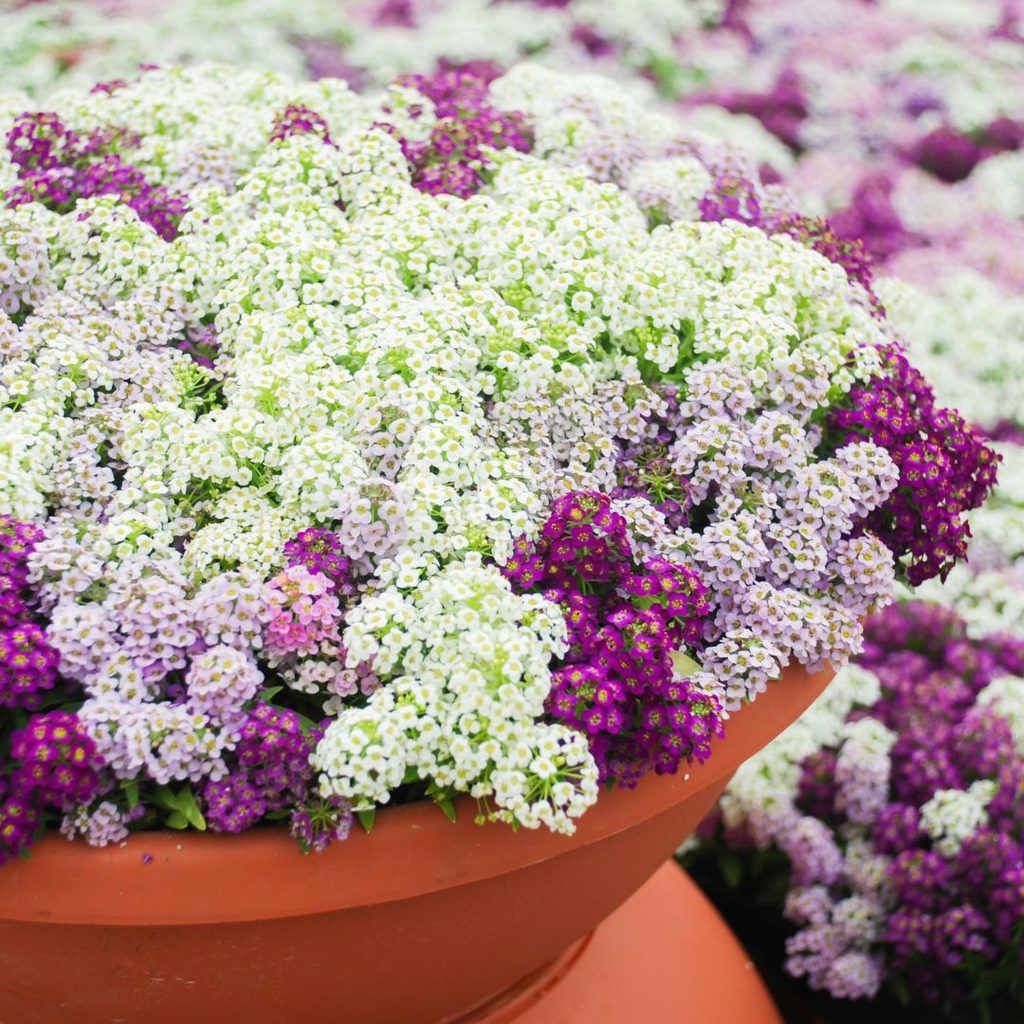
Then there is Kate Greenaway’s Language of Flowers, which gives sweet alyssum the meaning “worth beyond beauty.”
I like the word beyond. It takes us past what first meets the eye. There is more to know, and more to be.
With the flower, we can follow that thought into fragrance, nectar and the life around it. But with people, I want to be careful where it leads. There should be no requirement to discover a hidden usefulness before deciding that someone matters. A person’s worth reaches beyond what we can see and what they can offer.
We often understand this quite readily when those we love are ill, troubled or exhausted. We want them to be comfortable. We want something to ease their heart. Their place in our lives does not depend on their making something admirable out of what has happened to them.
Yet somewhere between loving a person and organising a society, we become remarkably willing to forget this.
That is where the flowers meet the political questions running through my work. Who has somewhere secure to live? Who can afford to rest? Who has a village? Whose account of their own life is believed? What do our institutions make possible, and what do they require people to endure before help arrives?
If it arrives.
“Flourishing” is a beautiful word. It can also become a demand if we lose sight of the conditions it requires. The garden in the poem makes those conditions tangible: light, soil, water, room, care. The flower is what we notice, but so much of what allows it to open is elsewhere.
So I try to remember that when I observe people. Especially when a life looks, from the outside, as though very little is happening. There may be recovery underway, or grief, or the slow work of finding a place in an unfamiliar world. There may be no transformation to report. Care still belongs there, even when we cannot see what someone is living through.
And there should be pleasure, too. Enough ease to notice a scent. Time that does not have to account for itself. The possibility of being absorbed in something lovely and meaningful while the people we love are still here to share it.
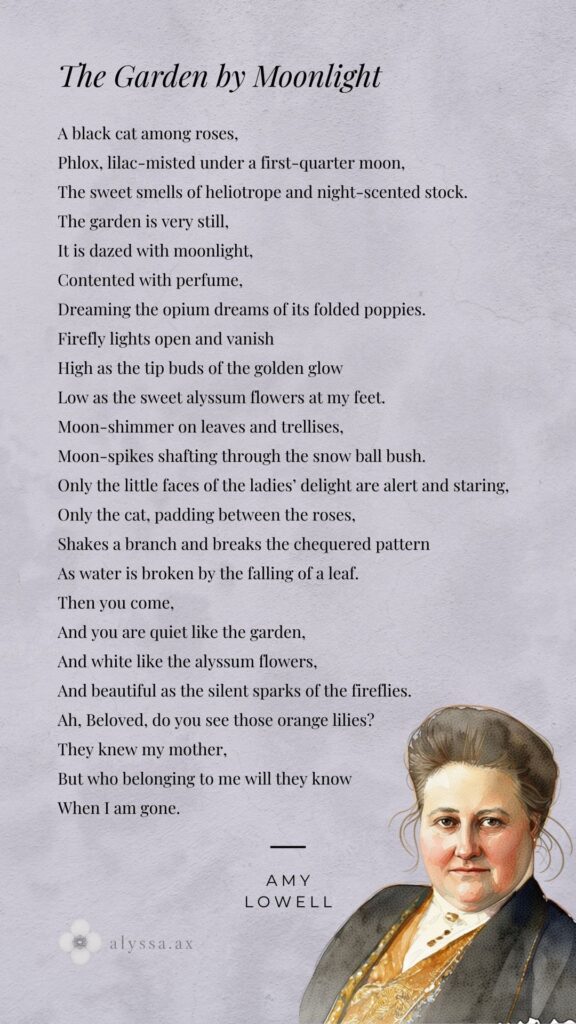
That is what draws me back to Lowell’s lines. Someone is looking at someone they love deeply, and the garden gives her a language for the Beloved: quiet like the garden, white like the alyssum flowers, beautiful as the silent sparks of fireflies.
There is a gentleness in these comparisons, an unpretentious beauty close to the ground. The Beloved’s arrival changes the garden because someone cherished is now standing in it, inseparable from all the loveliness. And for a moment, she is held in tender attention, her simple presence enough, the flowers giving the speaker a language for what she sees.
Then Lowell turns to the orange lilies.
They knew my mother.
It is such a small sentence to hold an entire relationship. The garden carries a history too. These flowers connect the person standing here with someone who stood here before her. And they may still be flowering when she herself is gone.
But who belonging to me will they know
When I am gone.
The question stays unanswered. The flowers will have their seasons; the harder uncertainty is who will be there to meet them. Who will recognise something familiar in their colour, or think of someone they loved?
I find that difficult to leave. We bring flowers to one another knowing they will fade, and we plant gardens that may outlast us. Both gestures carry something of the same wish: that there should be beauty in someone’s days, that something we have tended might go on giving pleasure beyond the time we have with it.
Alyssum gives me a small way of keeping these things together: the questions that need serious thought, the conditions that need changing, and the ordinary happiness of being alive among other living things.
It has been close to my name, and to my thinking, for some time. Here, it grows at the edges of my words.
I wanted there to be flowers when you arrived.
So here they are.
Comments