



On autonomy, peace and keeping our word
Finland’s commitment to Åland’s autonomy had an excellent week abroad.
On 13 and 14 October, Åland’s parliamentary representatives were in Geneva discussing what our islands might teach the world about peace, identity and self-government. Finland’s Foreign Ministry had helped finance the visit and originated the idea of presenting The Åland Example there.
A settlement capable of accommodating competing national claims without war certainly deserves attention. Speaker Jörgen Pettersson also made the domestic difficulties explicit in his presentation. He specifically warned that Helsinki too often treats autonomy as an exception to administer rather than a constitutional partnership to develop.

On the evening of 14 October, back in the Example, we learned with great disappointment that the comprehensive revision of the Autonomy Act would not happen during this government’s term.
The story of the Example seems to travel rather better than the legislation.
Thus, Finland was explaining the value of accommodating difference to an international audience while failing to agree on how to accommodate the difference already inside its borders.
One begins to wonder whether The Åland Example comes with separate instructions for domestic use.
The arrangement is certainly worth preserving and improving. For those of you who might have missed European History 101, Finland retained sovereignty over Åland under a settlement that required it to guarantee the inhabitants’ Swedish language, culture and self-government. The Åland settlement was one of the few successes of the rather short-lived League of Nations. Those protections belong to the terms of the relationship.
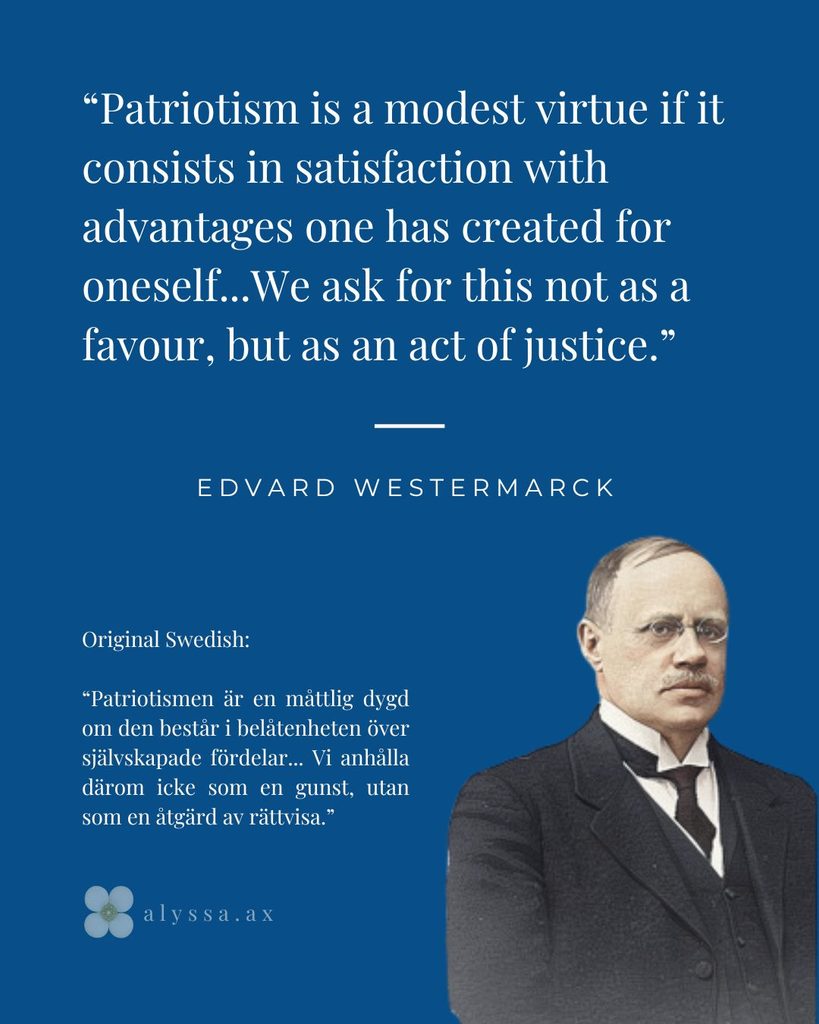
Their inconvenience to a later government does not turn them into an unsolicited favour.
I have found myself explaining versions of this history to people on the Finnish mainland at various points, most recently this past June in Helsinki. It is a somewhat peculiar role for an American-born woman who has lived here for six years and learned much of the relevant history only recently herself.
When I lived in Sweden, people always wanted to talk about the United States. That seemed fairly predictable. The United States is a megaphone-land, one that everyone thinks they know from films or television programming, their favourite hamburger restaurant, or a trip they took to New York that one time. People love to show off their “expertise.”
But from the very start, when I am on the mainland, the place that attracts the questions is always the home I have just come from. Åland is apparently far more exotic than my American accent, yet Åland is just a cheap booze cruise away. Despite this, many have never visited.
The curiosity is usually warm and may reference an aforementioned ferry drive-by or a long-remembered childhood vacation, but not infrequently the queries are edged with an assumption that life on Åland is somehow exceptionally comfortable or idyllic. Even worse, I have been asked if “they hate us.” I assure them that that is certainly not the case.
There seems to be a particular freedom in asking somebody like me. I know enough to explain what it is like with “those people,” while presumably remaining foreign enough not to take the volley of questions personally. I like to think I answer fairly, honestly, and sometimes, when confronted with misconceptions, firmly.
And yes, I do live among those people. Usually peacefully. Some of them are my children.
Inevitably comes a question of why I did not simply move to mainland Finland. Even this is inevitably tinged with a tone of “what did you find lacking in us?”
The answer is a very simple one: the Swedish language. It is nothing personal. I spent many years making a life in that language before moving here. Being able to continue using it and improve my command of it mattered enormously to me. I point out that having two official languages gives Finland an advantage at a time of demographic challenges.
I confess I am a bit flummoxed when Finnish, notoriously one of the world’s hardest languages, is sometimes proposed with the breezy practicality of a Finn recommending a different bus route. The years required to inhabit another language would have to come out of the life I am already living. I simply cannot afford it.
In 1998, I first encountered Swedish as a bright-eyed seventeen-year-old exchange student in Eskilstuna. When my family moved to Åland in 2020, I was trying to hold on to the language and the life I had built within it. From late 2021 to early 2022, pregnant with our twin sons, I spent months in hospital in Turku. Swedish was suddenly less available in the institution I needed. English, my mother tongue, helped me through. That was a piece of good fortune another Swedish-speaking patient might not share. The experience was very illuminating for me, especially when even the English failed.
I described this experience in my keynote at the Finland-Swedish Integration Days in October a year ago. The language I had chosen had brought me to a vulnerability I shared with people who had inherited it. The legal position of Swedish had become something I could feel in the circumstances of my ordinary, rather frightened human life, in which my future and what was most precious to me hung in the balance.
People organise their plans and their hopes around the arrangements a society says it will uphold. We choose where to live, the language in which our children will grow up, the work to which we will give ourselves. By the time somebody suggests that the terms are becoming inconvenient, quite a lot of a life may already depend on them.
That is one reason this week’s failure cannot remain at the respectable distance of a constitutional discussion.
There are lives at stake inside the arrangement. My own is one of them. If you are reading this, likely yours is as well.
Today’s interview with Harry Jansson gives some of those lives a more concrete place in the argument. Jansson chaired the political reference group working on the reform. He describes lost improvements to Swedish-language digital systems and the failure to establish a workable relationship between Åland’s authorities and Finland’s welfare regions. The article identifies compulsory forensic psychiatric care and emergency child placements as areas where the systems collide.
The child-protection proposal reported earlier this week illustrates the problem. Åland’s government warned that the Finnish draft assumed the existence of mainland welfare regions, which Åland does not have. If adopted without the necessary corrections, it could leave no competent authority here to take certain decisions, including emergency placements of children outside the home. The government also criticised having only days to respond to around a thousand pages.
A child needing somewhere safe to go cannot organise their crisis around the next parliamentary term.
Finland is, of course, entitled to reorganise its administration. Doing so creates work it must undertake with the autonomy that will live with the consequences. The absence of welfare regions on Åland is hardly an obscure feature waiting to be discovered by an exceptionally enterprising civil servant. It belongs inside the Finnish drafting process. Instead, Åland must catch the omission, explain its own existence yet again and seek corrections before the mainland timetable carries on without it.
Being small does not make that less work. It makes the people available to do it fewer.
Jansson also identifies the Finns Party as the principal obstacle to strengthening Swedish. His explanation is particularly revealing:
De ser att Åland kan vara ankaret som håller emot, när de vill försämra svenskans ställning i framtiden.
(In English: They see that Åland could be the anchor that holds firm when they want to weaken Swedish’s position in the future.)
That is the assessment of somebody who participated in the process. It describes resistance to a protection because the protection might work. A stronger position for Swedish in Åland could make it harder to weaken Swedish elsewhere.
Now I knew which party I expected to find behind the obstruction before the reporting named it. This required considerably less political insight than one might wish. You would have to be buried under a rock not to know which party would have posed a challenge.

In 2018, the Finns Party proposed cutting a whopping €100 million from Åland’s equalisation payments, presenting the proposal as a matter of equality between mainland residents and islanders. This August, its youth organisation called for an officially monolingual Finland and compulsory Finnish in Åland’s schools. Those youth demands are their own programme. They also make the underlying political imagination incredibly easy to recognise.
An arrangement protecting a minority is twisted into an unfair advantage over the majority. The majority’s institutions supply the neutral starting point. Anything else must explain why it deserves to exist. Equality gradually comes to mean that everyone should resemble the people who already determine what normal looks like.
Åland’s autonomy is difficult to accommodate within that imagination because accommodating a different political and linguistic community is precisely what it is for. The lack of imagination is both the start and the end point.
The Finns Party, however, does not rule by decree or exist in a vacuum. It belongs to a government. Petteri Orpo’s National Coalition, the Swedish People’s Party and the Christian Democrats chose to govern with it. Coalition partners negotiate priorities and decide which disagreements must be resolved to keep their programme moving. If one party obstructs a promised reform, the others still owe an account of what they did about it.
There were real legal questions. The Finnish Supreme Court’s August opinion supported some proposed changes and criticised others, including a constitutional cross-reference it considered liable to create uncertainty. That differentiated assessment called for serious work on the draft.
Åland’s MP Mats Löfström has questioned the subsequent preparation, including the deletion of contested provisions rather than further work on their wording. He also told Ålandstidningen that the matter never reached a final negotiation between the four governing party leaders before the comprehensive reform was abandoned for this term. These are questions about how a government handled its own undertaking.
The minister responsible for Åland cannot become merely another disappointed observer when Finland fails Åland. Anna-Kaisa Ikonen’s responsibility includes securing the political conditions in which the reform can succeed. The difficulty of that assignment is part of the assignment.
Johan Ehn, Åland’s representative in Helsinki, has urged Finland to move beyond praising autonomy in ceremonial speeches. He makes a very good point. Pointing to the failures of successive governments, he asks:
Vad vill man med vår självstyrelse?
(In English: What do they want to do with our self-government?)
Sjögren has named the governments of Sipilä, Marin and Orpo in recounting the long process. However, I feel they warrant somewhat different accounts.
Under Sipilä, disagreement over powers and financing prevented the comprehensive reform from proceeding. In January 2019, Yle reported that National Coalition and Blue Reform opposed Åland minister Anne Berner’s proposed financial settlement. Orpo was already finance minister. Thus, National Coalition’s part in this history long predates this week.
SDP’s Sanna Marin took office shortly before the pandemic and then faced Russia’s invasion of Ukraine. And those circumstances do matter. Even Åland’s own account describes exceptional workloads and urgent welfare-reform problems crowding out the comprehensive revision, alongside unresolved constitutional questions. Her government failed to complete it, but the governing circumstances cannot honestly be equated with those of the previous or current government.
The involvement of three governments does tell us how long Åland has waited.
It does not distribute responsibility equally for the decision taken this week.
Nor has the waiting been empty. The institutions can replace the participants while retaining the problem. New ministers inherit a regrettable situation. The people who need the arrangement to function inherit another wait, with its repairs and uncertainties to manage in the meantime.
The increasing discussions about Åland’s military status bring the question of commitments into a different register. In a taxi on the mainland during my latest visit to Helsinki this past June, I found myself explaining why putting the military here was quite a bit more complicated than deciding that it sounded sensible. Once again, the American newcomer was explaining Finland’s international commitments to a Finn.
When an American has to supply the European history, we can at least say that some fairly generous stereotypes have broken down on all sides.
See, international understanding is possible.
Incidentally, these conversations began not long after I moved here. Apparently, a bare year on Åland was enough to qualify an American newcomer to explain Finns and Ålanders to one another. They had only had a century’s head start. This year, Åland Living even made me an Åland ambassador.
By then, I had been doing the work for years, whenever somebody discovered where I lived and required a briefing. It was considerate of them to recognise the critical diplomatic work being performed in Helsinki taxicabs.
Demilitarisation restricts military presence and fortification, with specified exceptions. Neutralisation concerns keeping the territory outside warfare. Finland retains responsibility for defending Åland, and its government says the existing arrangements are compatible with NATO membership. These are matters with a history, legal terms and consequences for other parties.
There are serious security questions to discuss. The people making their homes here have very good reasons to be attentive to the answers. Changing an arrangement in the name of protecting us requires some considerable thought about the dangers the change could itself introduce. And I am rather attached to the people who would remain here after that conversation, likely held elsewhere, came to an end.
The impatience also reaches beyond the Finns Party. National Coalition’s June 2026 programme expressly says it is prepared to examine dismantling demilitarisation. That is a party position, rather than a government decision to abolish it. It nevertheless matters to the political setting in which Åland’s exceptional position is discussed, when National Coalition politicians are running the show currently.
Sometimes explanation does help. But sometimes I notice that the answer is that the obligation should no longer count.
In a Reddit discussion marking Åland’s centenary in June 2022, complaints about the islanders’ supposed privileges prompted reminders that these arrangements were part of the settlement Finland had accepted. One international commenter wrote:
That is the deal you accepted when you decided that you wouldn’t allow them to be part of Sweden.
Elsewhere in the discussion, a reminder that agreements impose commitments received an answer beginning:
I agree, but times change.
In a 2020 Finnish-language discussion about Åland’s financing, a commenter proposed wrapping the place up and giving it to Sweden for Christmas. Other discussion threads rehearse variations on surrendering the protections or getting rid of the islands. These are revealing specimens of public rhetoric. Obviously, they offer no measure of what Finland as a whole believes, but that their frequency has increased raises some eyebrows.
What interests me is the ease with which an inhabited community that was fought over just over a century ago becomes an awkward possession.
Keep it if it behaves. Dispose of it if the conditions become tiresome.
The people whose future is being discussed disappear somewhere between the proposed transaction and the joke.
That is a rather different conversation from one about what Finland agreed to, why it agreed, and how it can fulfil those obligations under changed circumstances.
A peaceful settlement has to survive changes of government and mood. Its value includes making certain questions dependable enough for people to get on with living.
Finland cannot make its authority over Åland seem ordinary while treating the obligations attached to it as an eccentric request from the islanders.
Then there is the language in which our own leaders have described this week’s failure.
On Facebook, Katrin Sjögren wrote that there was little or no understanding of Åland and the essence of autonomy. She ended with:
Ålands rätt och möjlighet att vara annorlunda.
(In English: Åland’s right and ability to be different.)
Sjögren’s understanding of unequal power seems to be particularly clear when Helsinki has more of it.
As such, I would like her and any future administration to recognise that claim when it shows up without an Åland flag attached. The person asking a public authority to fulfil its obligations may have no minister to call, no parliamentary committee, no trip to Geneva. Their life continues while the matter receives further consideration. Having less power does not make the obligation owed to them less real.
As we have heard considerable clarity on that subject this week, it would be a pity to reserve it only for correspondence with Finland.
I think most newcomers or minority groups can understand that there is a particular humiliation in having to explain what makes your life possible to somebody whose responsibility already includes taking it into account. You assemble the facts, set out the legal obligations, identify the provision, try another formulation. You become increasingly knowledgeable about a problem the person with greater authority can afford to understand rather less well.
And somehow, your patience becomes part of what is being assessed.
Åland knows only too well what it is to have its arrangements regarded as complicated, costly or unfair to people who were perfectly comfortable before the question arose. That knowledge ought to help us recognise what happens to newcomers when their contribution is welcomed but their equal standing remains negotiable. Learn the language. Work. Participate. Then discover that asking an awkward question can reopen the assessment of whether you fitted in sufficiently to ask it.
It can be said there certainly remains some scope for knowledge transfer.
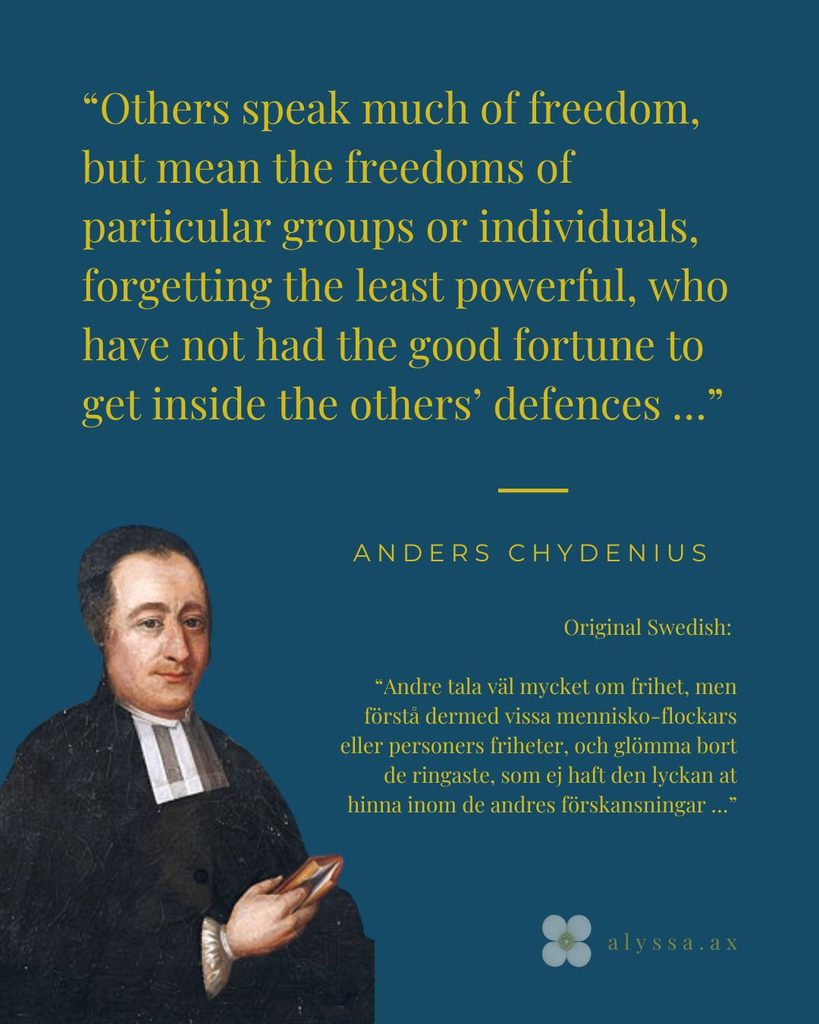
Good faith is exposed in that encounter. People contribute work, take words in good faith, and make commitments because they understand that the other party’s word has consequences too. When the undertaking recedes and the person insisting on it becomes the difficulty, they are left defending both the original agreement and the legitimacy of expecting it to mean anything.
ÅSUB’s latest study of experienced discrimination, based on its 2025 survey, found that 36 per cent of respondents reported having experienced discrimination on Åland. Reports were more common among people with a first language other than Swedish and those identifying as belonging to a minority. The report also describes reluctance to take matters further because of doubts that anything will change, fear of consequences and fear of being labelled difficult.
These are reported experiences, and they deserve a place in our account of ourselves. A society can be the minority in one relationship and the majority in another without anybody moving house. The change is in who has the power to make accommodation seem optional.
I would like to add that the same standard belongs in recent Facebook discussion of Arsim Zekaj. His decisions as social and health minister warrant scrutiny. By all means, ask what evidence supports them, who will be affected and whether he has answered the questions.
However, I would like to take this time to emphatically point out that his surname contributes remarkably little to an assessment of the health budget and the requirements from above to save costs.
Any minister owes the public an account because he holds public power. His background, ancestry or the aspersions cast on his character supply no missing evidence about a budget or care decision. People who understand why Åland should receive proper consideration without becoming more like mainland Finland should be able to easily follow that argument. Yet, some seem to struggle mightily with that. It does not create the best impression of Åland.
That being said, Åland’s rights survive every unpleasant comment or accusation ever posted from these islands. Finland’s obligations remain. The legal foundations of collective autonomy and individual rights differ.
The question that travels between them is whether we can recognise an obligation when fulfilling it requires something of us too.
I have four children growing up here. I want them to have a language in which they can make themselves understood, and a society willing to be changed by what it comes to understand. I want them to love a place without learning that love requires protecting it from uncomfortable knowledge.
I can recognise the injury being done to Åland while insisting that its institutions, in turn, take seriously the people within it. Indeed, understanding the injury makes the demand harder to set aside. We have supplied quite a precise account this week of what it feels like when those with greater power regard their commitments as something to revisit at their convenience.
Any human being has just one life in which to absorb the consequences.
Time spent establishing that an institution must answer you is time unavailable for the work, relationships and possibilities that made the answer matter in the first place. The institution can carry a question into another term. A human life cannot renew itself so conveniently.
I know why Åland wants to be understood. I would like that knowledge to make us more recognisable to one another, not just to Finland.
We have explained, with considerable feeling, for quite some time now what it means when the people with the power cannot see us.
We might remember the feeling when somebody else is trying to get our attention.
Comments